

The decision to write this article came from a thought that popped into my brain:
“What if I share everything I do? My entire founder marketing system.”
A year ago, I decided to quit my cozy job to pursue a career as a founder-led marketing professional.
Twenty years in content marketing taught me to spot shifts before they happen. I bet my new business on founder-led marketing, and the market moved exactly where I expected.
And I was right. Since then, I’ve watched that shift happen in real-time. Budgets have shifted from SEO and blog content to personal branding, and LinkedIn in particular.
I was recently in a meeting with a client in the health industry. She mentioned she avoids the phrase “method” because it’s become an overused buzzword. I feel the exact same way about the word “system.” Marketers in my industry abuse it. They say “system” when it’s just a collection of the most basic concepts like “Find a good hook” or “Set goals”.
From my experience with clients, publishing content while using a real system is the only way to scale on LinkedIn without this burn out.
The Difficulty of Running a Content System
A typical founder is smart, usually much smarter than average. They run this thought experiment in their heads:
“I built an awesome company that people value. If I run the same playbook with content: identifying a pain point, providing a solution, and scaling the delivery, I can create an engine for my content. People will love it.”
The common refrain is: 'I don't have time.'
And you're right. You still have that business to run.
This is where the ‘hero complex’ or the ‘do-it-all’ mentality kicks in. ‘I can still do it!’”
This time debt causes them to look for shortcuts. They usually try two things:
1. Letting AI write the content: This produces vanilla, soul-less “5 tips for productivity” posts that everyone scrolls past.
2. Hiring professional ghostwriters: The problem here is not just that these writers lack the scars of your experience. You end up hitting ‘publish’ on words you didn’t even read. In an economy where Trust is the primary currency, I don’t have to explain why outsourcing your voice is not the best idea.
Because founders are already running a successful operation, they cannot manually manage a second one.
Important Point on Finding the Right Audience-Founder Alignment
There’s one formula for founder marketing that is not necessarily an obvious one:
Your work gives you your expertise, and that’s the incentive for your audience to follow you.
This is why you need to find alignment between your work, your content, and your audience. If you only share content that includes high expertise, it’s not enough. You have to make sure your business’s target audience cares about this expertise.
Some examples:
High alignment of expertise and audience: Think of a CMO promoting a SaaS tool for marketers: The CMO shares their everyday work, and it’s highly aligned with their audience of marketers.
High alignment of product and audience: Think of a CEO of a Tool for graphic designers. The CEO should focus more on the product, since graphic designers would care about these features, and less about your job as CEO.
Low alignment of expertise and audience: Now think of a CEO of an AI tool for developers. If the CEO shares his everyday CEO work, that won’t attract any developer. Instead, the content could focus on the CEOs code experiments, since these would indeed attract developers.
The Founder does the Work, the Work provides the Content, and the Content attracts the Audience. If one link is broken (e.g., you’re writing about things you don’t actually do, or the audience doesn’t care about the content), the whole system collapses.
Back to Our Content System, Finding the Virtuous Cycle
The system I’m suggesting here is lean. It runs as a virtuous cycle: your work provides the raw material for posts, and the content creates a feedback loop that sharpens your professional thinking.
The secret is shifting from creating to capturing. Instead of staring at a blank cursor for an hour, you’re simply documenting the wins and fires of your workday.
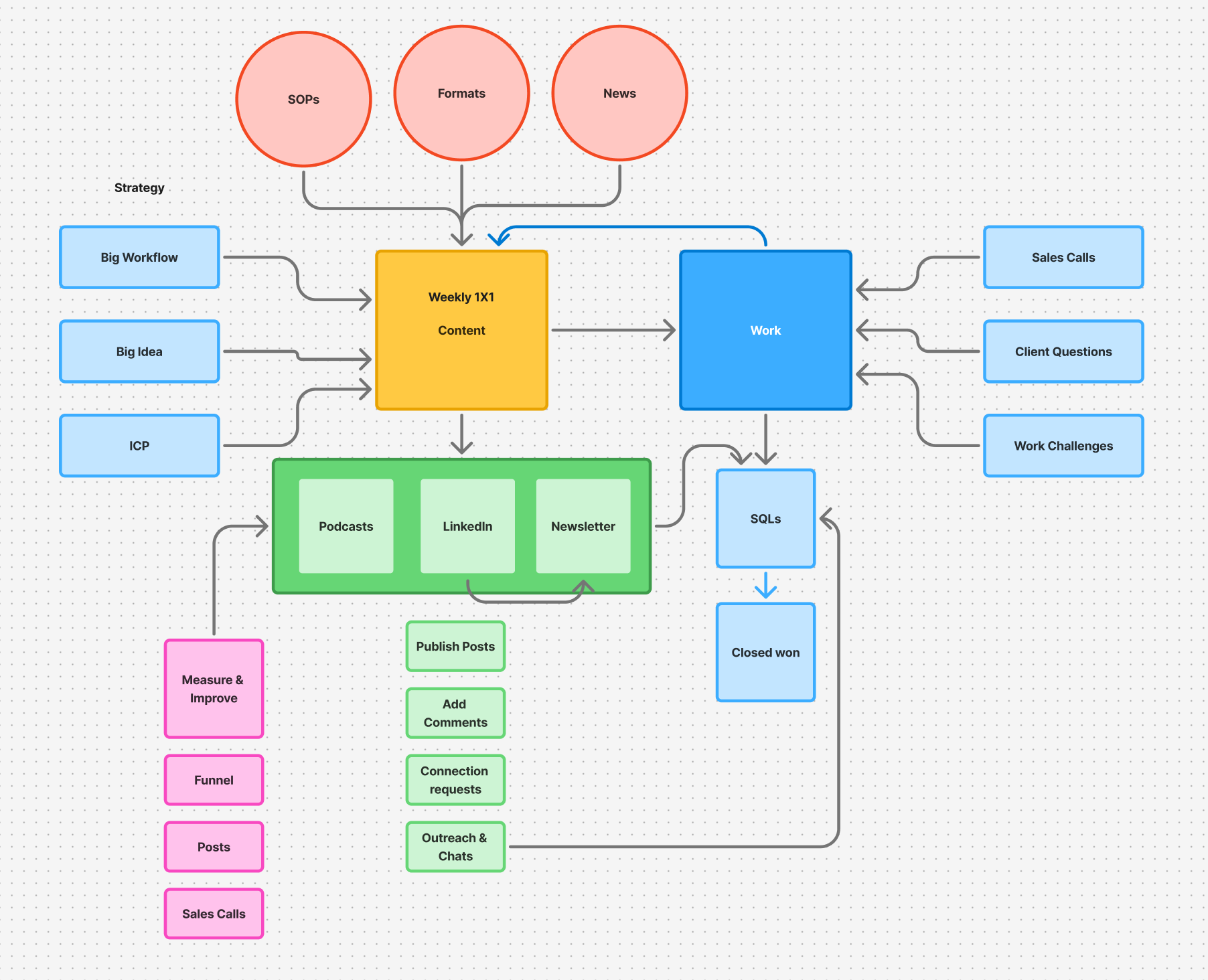
I built this visual map to help a client see the gears turning in real-time. It’s the blueprint for a LinkedIn engine that’s easy to maintain.
Here it is:
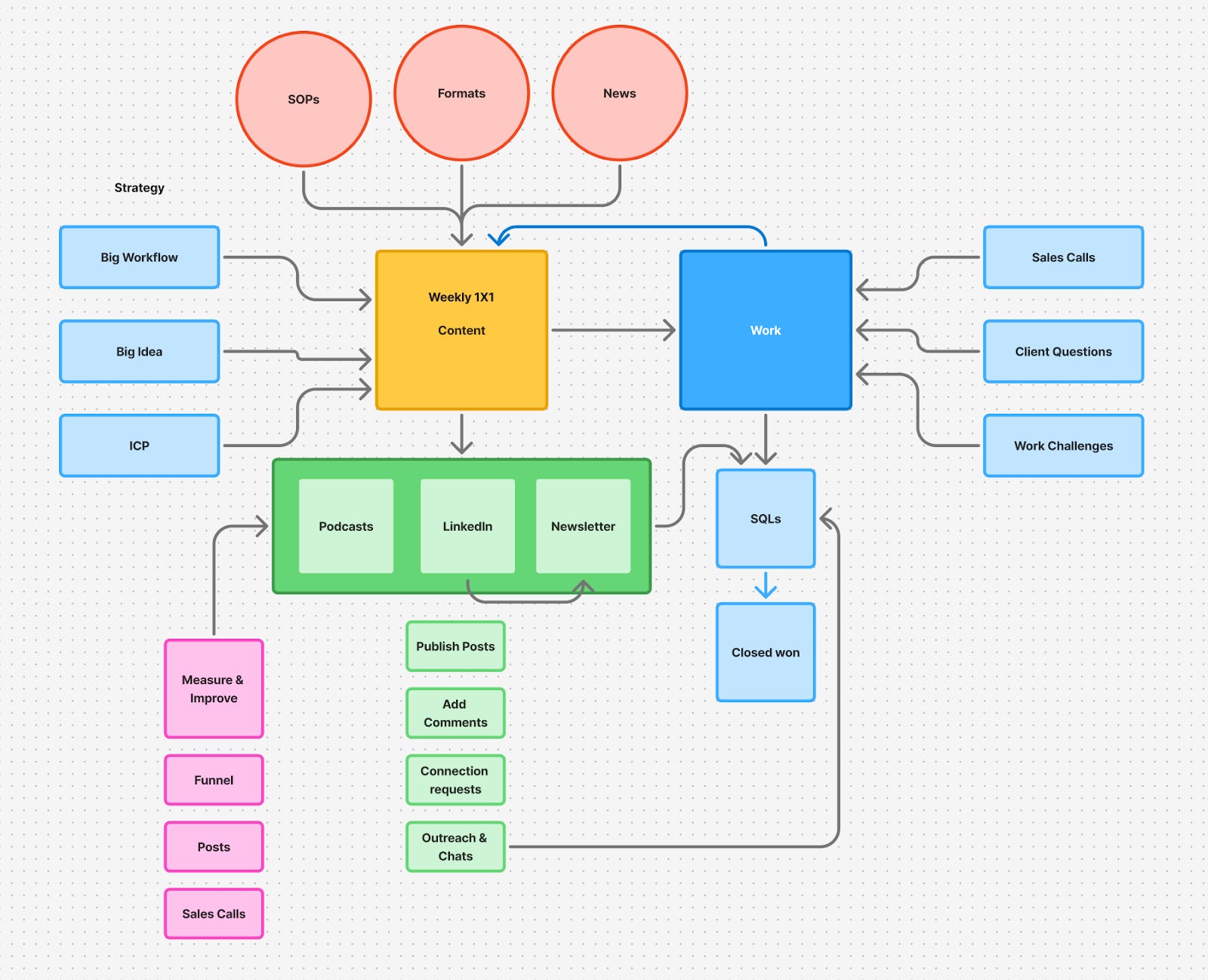
If you are keep up with this simple diagram, you’ll produce content you’ll be proud of, get the audience to love it too, and get real business results.
Let’s go over the elements.
1. Strategy
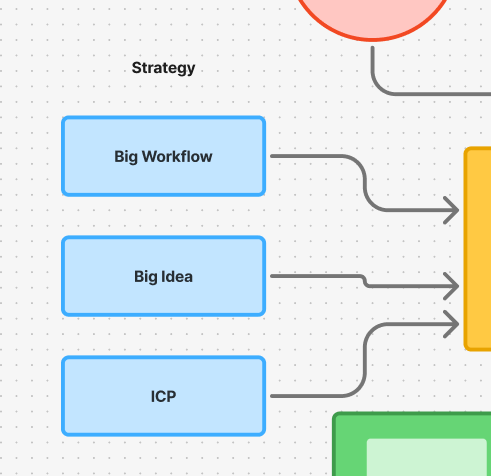
Before I start working with a new client, I ensure we are aligned on a written strategy. We don’t “spray and pray.” We don’t post just to see the number of impressions go up. Impressions don’t pay the mortgage. Conversions do.
Our content strategy is built on what I call ‘The Big Workflow’ (your unique process) and ‘The Big Idea’ (your overarching perspective). I discussed this last week. Even if you missed my previous breakdown, think of these as the How and the Why of your business.
It’s not a generic “I help X do Y.” It’s a unique perspective extracted from the actual work experience of the founder.
Part of the beauty of this whole system is that it is continuously improving and updating, and the strategy part is no different. The initial Big Workflow and Big Idea probably won’t be anything like the ones we will use 4 months into the project. They act as the North Star, keeping your content aligned even as your tactics evolve.
2. Content creation
A founder I started working with was surprised how quickly we started writing.
“No content pillars?” He asked.
He was used to SEO pros building endless keyword terms on Google Sheets. He actually sent me some of these documents.
That same founder sent me no less than 60+ documents, spread across 5 folders and 12 sub folders.
In my system, we don’t overcomplicate things.
We use “The Big Idea” as a litmus test for every piece we write. For my own business, the big idea is: “Stop publishing generic noise. Scale your authority by turning expertise into trust.”
Don’t just share opinions. In the age of AI, takes are a commodity. Everyone is generating them at scale. This is why raw opinion content is the most common failure point I see on LinkedIn today.
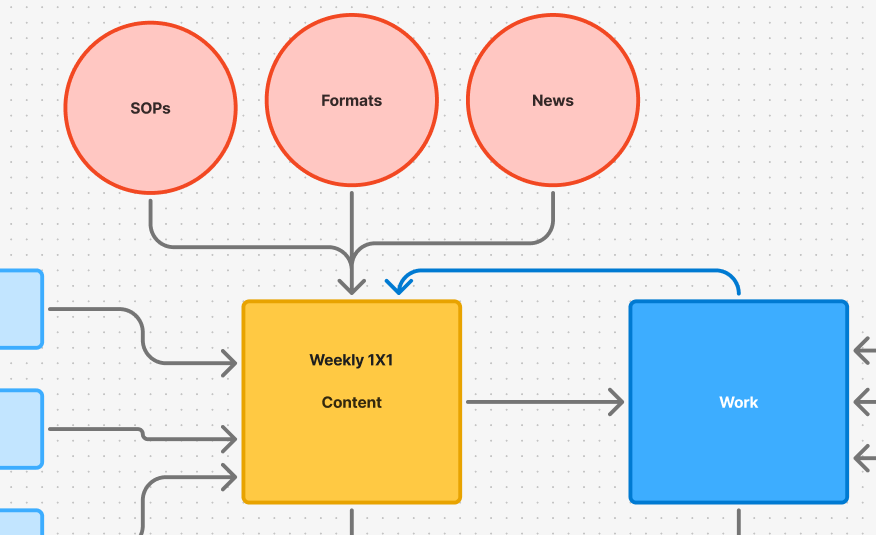
Instead of picking floating thoughts from our head, we look at our Inputs. These are the raw materials already sitting in your business. While every founder is different, these three sources are the most common sources for high-authority content:
Work (The Gold Mine)
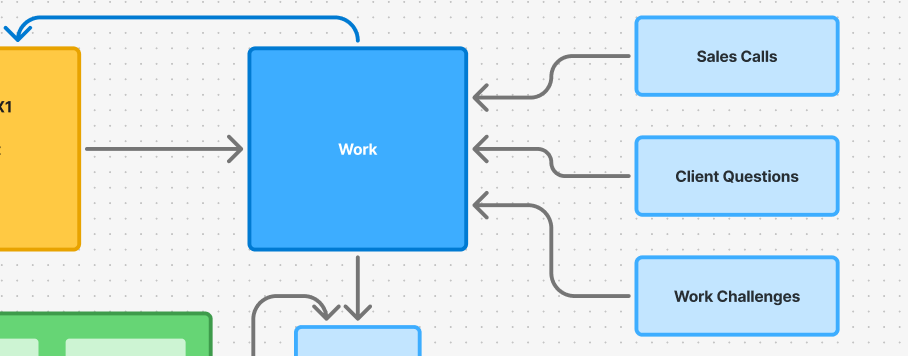
That’s our number one source of expertise. Hands down.
The diagram above shows three places to draw content from:
Sales Calls: What objections did you hear? That’s a post.
Client Questions: If one client asked, 1,000 prospects are wondering.
Work Challenges: Talk about the fire you put out yesterday. People trust those who solve real problems.
Of course we can think of many other sources that may come from our work, but the structure of the basic system is what matters.
Pro-Tip: Don’t wait until Friday to remember these. When a client asks a great question, dictate a 30-second voice note or send it to yourself on WhatsApp immediately. That’s your draft.
News
In a previous newsletter, I wrote about “being in the know” for your audience. There are various ways to stay in the know, but one of the most common ones is following industry news and curating it, offering your POV on the topic. Your audience doesn’t just need the news input, they need to know how a founder with your experience views what happened. Curation + POV is the fastest way to signal authority.
Formats
Usually in the strategy stage, we also come up with the various formats we will potentially create. These may include case studies, success stories, events, contrarian POV, build in public, and other popular formats.
In theory, you could produce only work and news content and that’s it. Or only work or only news. Some successful founders do that. But varying your formats keeps the process fresh for you, and serves the audience’s interests. A Case Study builds deep trust, while a Contrarian POV sparks the engagement that brings new eyes to your profile.
SOPs
SOPs stands for Standard Operating Procedures. There are the workflows that the service provider follows when doing the job.
This type of content is for a specific type of founder. The educator type. I am an example here. I’m writing this piece where I am sharing knowledge I’ve worked hard to test and explore over the past few months.
Pro Tip: Using AI for Content Creation
Before we wrap the content creation part, I want to mention how AI helps in this step.
The skeleton of your content must be human-made.
Once you have the basic premise of the piece built, you can use AI to flesh out the draft, improve the story arc and so on.
AI is also your best ally for repurposing (discussed in the next step). Once you’ve written the ‘human’ draft, let the AI turn it into a carousel script, a newsletter intro, or a series of tweets.
Use AI to suggest a stronger hook, find a better metaphor, or trim the word count. Let it be your editor, not your ghostwriter.
I’ll dive deeper into my specific AI prompts in a future piece, but the golden rule for now is: Expertise comes from you, polishing comes from the machine.“
3. Distribution
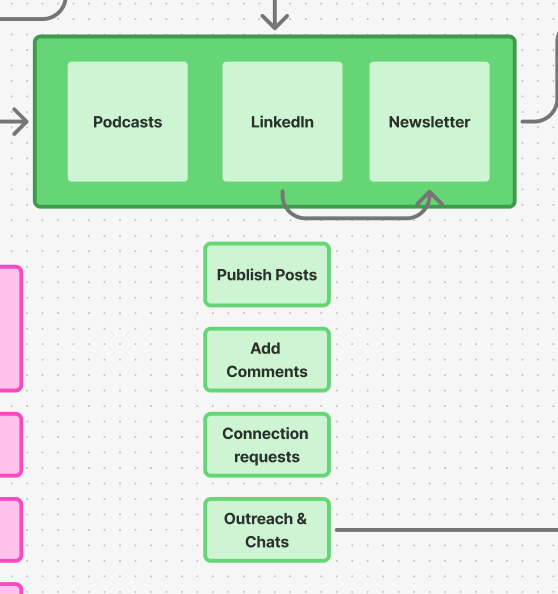
Creating the content is only half the battle. If a founder posts into a void, the system breaks. However, distribution shouldn’t feel like a second job.
LinkedIn (The Primary Engine)
Distribution in LinkedIn is simpler than you think.
It boils down to three simple actions:
Active Engagement: Spend some time each week adding thoughtful comments to other leaders’ posts. It’s a distribution tactic to get your profile (and your content) in front of their audience.
Targeted Growth: Sending connection requests to the exact people who need to see your “Big Idea.”
Direct Conversations: Use the DMs to turn passive readers into active partners. Whether you’re seeking a collaboration or initiating a sales cycle, this is where attention converts into revenue.
The real danger here? While spending time on LinkedIn you might get sucked into scrolling LinkedIn. In my experience, there is really no way to avoid this other than just constantly reminding yourself that most content on LinkedIn is made by people you wouldn’t consciously decide to follow.
Video
Video was hailed as the new medium, then forgotten, then hailed again. In personal branding video can play a significant role, but there’s always a tradeoff.
Video is an efficient way to deliver information and communicate with your audience in an authentic way. It’s still harder to fake a video for AI.
The downside is that producing videos takes a lot more time, and sometimes that time investment is not worth it.
If you do decide to create videos, know that LinkedIn does not promote videos.
LinkedIn prefers native text, so treat video as a multi-channel asset. If you’re going to spend 2 hours on a video, ensure it’s working for you on YouTube and Instagram as well.
Podcasts
Once you have a system in place, everything is easier. You know what to do in terms of production, so your focus can come back to thinking about the content and writing.
The next level is adding appearance on podcasts as a way to expand your reach.
You find podcasts with a similar target audience, and pitch yourself to the host.
Since you already have a system to produce weekly content, and you are already fine tuning your big idea, you’ll come to the podcasts with an agenda and messaging and won’t just blur out answers off the cuff.
Repurposing
Repurposing was the “It” word 10 years ago. It’s still relevant today. The most important thing to know about repurposing is not getting lost in it. Instead of just diving into a whole new project of repurposing, try to fit the repurposing into the current system.
I use a combination of NotebookLM and Gemini to create a ‘Second Brain.’ By feeding my past content into a custom AI, I can ask it, ‘What have I said about sales objections before?’ This turns months of work into an instant library for new posts.
Newsletter
Your newsletter is an important piece. We want our system to be resilient and robust. With platforms like Linkedin, we don’t know the future changes that will take place. Our newsletter is our insurance.
When we publish on LinkedIn, we don’t know who from our audience the algorithm will kindly choose to send our content to. The newsletter makes sure our content reaches all the inboxes in our list.
4. Funnel
The idea of the funnel is that the system is working. Like a conveyer belt. Like a sewage system. If there is a leak somewhere, it is easy to pinpoint and fix. You see the ongoing flow of the whole system.
Our funnel Moves people like so:
External audience (podcast appearances)
Platform audience (linkedin content)
Owned audience (newsletter)
SQLs (Outreach + content mentioned before)
Clients
5. Measure and Improve
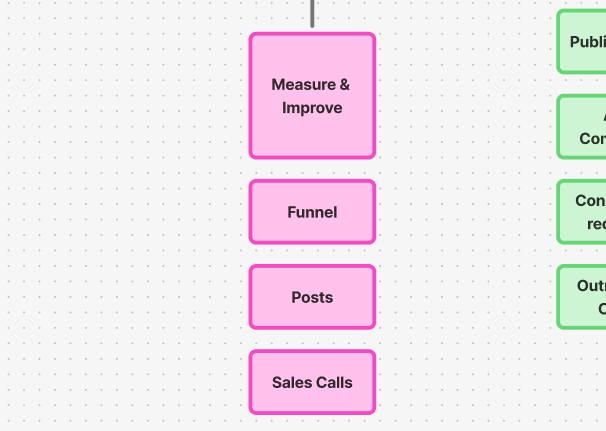
An assumption I have is that the system is always incomplete, especially in the first few months after deciding to build it.
The only way it will progress is if we measure the actions happening within it, and fine tune our future actions. Like every part of this system, we do this in the most simple way possible.
What do we measure and improve?
The Funnel Itself
Working with this system, I have a goal in mind. I want to reach a point where my main concern of the week is “what will I publish next”. This is what I want my brain to focus on. All the rest of the system just happens. The funnel plays a major role in making this happen.
Think of the funnel as the plumbing of your business. When it’s working, everything flows behind the scenes. If there’s a leak, you’ll see the puddle immediately and know exactly where to tighten the pipe.
With a quick check, I can make sure everything is flowing smoothly.
External audience (podcast appearances) -> Platform audience (linkedin content) -> Owned audience (newsletter) -> SQLs -> Clients
If an area in the funnel is leaking, it’s fairly easy to recognize it, even without a close monitor of the stats.
Look into these areas:
Visibility: Are impressions and follower counts trending up?
Engagement: Are people commenting and starting DMs?
Intent: Is the Newsletter seeing clicks on the “Call to Action”?
Revenue: Is the sales pipeline steady?
If your LinkedIn views are high but your Newsletter isn’t growing, the leak is your Call to Action. If your Newsletter is growing but no one is booking calls, the leak is your Offer.
Each Post
Much like with the funnel, I don’t want to get obsessive over checking each post. Instead, I do want to keep recognizing what my audience appreciates and continue to fine tune my messaging accordingly.
Sales Calls
This is another great source of optimization. How I pitch on sales calls influences what I write about and vice versa. I want to hear objections, reservations and resonance on sales calls and infer what I should write about.
General Monthly Review
Once a month I do a proper review, to get a birds eye view of what is working and what is not, and assess if we are on the pace we wanted towards our goals.
6. Sales
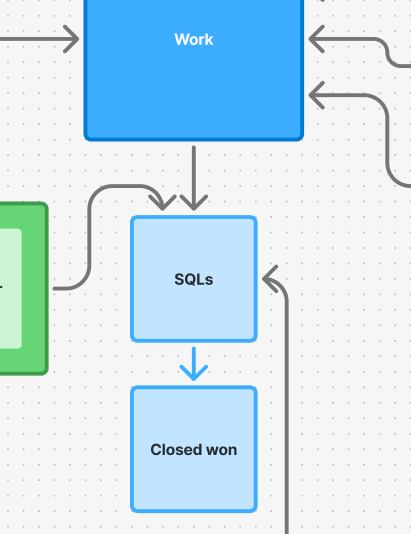
In this system, Sales is tightly connected to content. It’s the natural conclusion of the trust you’ve built. By the time a lead gets on a call, they shouldn’t need a hard sell, they should already be convinced by your expertise.
Content is the constant, sales is the variable. You can dial your outreach up or down, but your content stays in the background, making every sales conversation easier.
The more you outreach, the more leads you get.
Having this system of content creation doesn’t only grow your exposure.
After you outreach a prospect, that person goes and checks the content you published. That’s the best testament to your service. The impact of your content on outreach is often overlooked.
Great Job!
That’s it. That’s the whole system.
It’s designed for the solopreneur or the CEO who wants to stay as lean as possible. It removes the “what do I post today?” anxiety and replaces it with a repeatable process.
The goal is a 1-to-3 hour workweek. You provide the expertise and the raw scars from your work, the partner handles the heavy lifting of distribution and formatting.
In my service, I handle most of the points in the system. However, if you are a solopreneur, you could use the same system to do it yourself.
Even if you choose to run this system solo, don’t do it in a vacuum. A system is only as good as its feedback loop. An external partner acts as the mirror that helps you see which of your ideas are actually worth telling your audience about.