

CEOs struggle to stay current. I see it all the time.
The founder and I commit to three posts a week. Then they get busy. We have nothing to post.
To combat this, I started showing up to sessions with the industry news ready. This way we have a fallback option.
A few weeks ago I tested this with a founder. We did a quick reaction to a major headline. It outperformed everything else we had spent weeks polishing.
The CEO is the one who brought the topic that hit 100k+ views. Not me.
This was enough to show me I was winging it. Up until then, my research was just scrolling my feed and hoping to get lucky.
I hated the idea of missing a major news event or trend. I also wasn’t going to pay for some overpriced tool.
So I built my own workflow.
Why Is Staying Updated with the Top Industry News So Important?
In my last article, I spoke about “being in the know” for your audience. Keeping updated with the news is a major part of that.
It helps you create content in busy weeks.
You can achieve expertise faster and “be in the know” for your clients and audience.
It informs real business decisions. You’ll know if you need to pivot before the market forces you to.
It keeps you from being boring. No one wants to read another product update. They want to know what is actually happening in the industry.
The Framework: Seek, Sense, Share by Harold Jarche
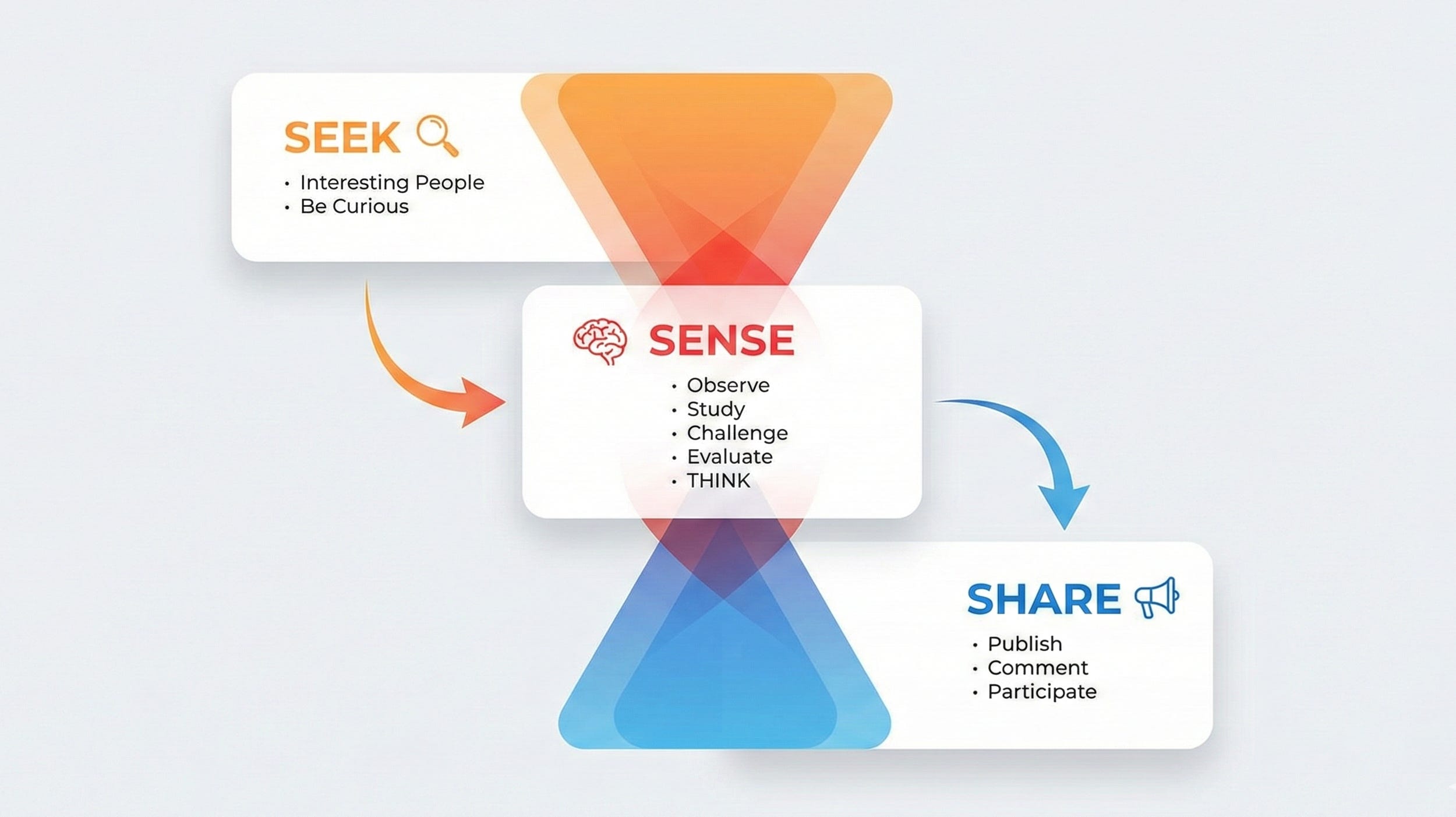
Harold Jarche’s Seek, Sense, Share model is the foundation for how I manage information. It breaks content creation into three parts.
The first stage, Seeking, is the intentional act of scouting for high-signal information amidst the digital noise.
This involves:
Identifying trusted sources
Following industry thought leaders,
Using methods to get a curated list to your email every day.
Sensing is the critical middle step where raw information is converted into actionable intelligence.
The final stage, Sharing, is the act of contributing your synthesized insights back into your professional network.
Step 1: Automating Industry News
We’re starting our process with the goal of getting a daily pulse on the category (competitors, regulations, trends).
Here is the prompt I’ll use:
“Act as a Senior Marketing Strategist and Research Analyst.
Task: Identify the 5 most noteworthy news stories, industry reports, or major updates from the last 10 days, specifically focusing on the intersection of [Topic 1], [Topic 2], and [Topic 3].

Criteria for Selection: * Prioritize “High-Signal” news (e.g., algorithm shifts, new tool capabilities, or major industry trend reports).

Avoid generic press releases; look for stories that signal a shift in how marketing strategy is executed.

For each piece, provide exactly three lines in this format:

What Happened: A one-line summary of the event or update.

Strategic Impact: A one-line explanation of why a marketing leader needs to care about this today.

Source: A direct URL to the full article or report.

Make sure you do not hallucinate any of the articles.”
Schedule: Set this prompt to run and arrive to your inbox once a day. (If you are using Gemini, use the “scheduled actions” feature)
Pro Tip: Treat the prompt like an employee, give it feedback to improve the results over time.
Pro Tip #2: Make sure the AI doesn’t hallucinate. Go to the links and make sure it works and matches. If it hallucinates, add another internal process to the prompt which validates each link.
Step 2: Curation of Trusted Voices
Here the goal is to filter out the noise by following specific Signal creators, top influencers in your field.
Here is the prompt:
“Objective: Act as a Social Media Strategist and Micro SaaS expert. Analyze the recent activity of the following creators to find a high-leverage opportunity for a thoughtful retort or engagement.

The Context:

Timeframe: Last 10 days.

Target Topic: [Industry Category]

Creators to Monitor: [Insert List of Names from your prompt]

Your Task:

Search & Summarize: Look for any posts by these individuals in the last 10 days that discuss [Topic 1], [Topic 2], and [Topic 3].

Identify the “Hook”: For the most relevant post found, identify the core argument or “hot take” the creator is making.

Draft a Retort: Provide 3 options for a high-quality response:

The “Contrarian”: Respectfully disagree with a specific point

The “Case Study”: A response that validates their point with a specific, hypothetical, or real-world example.

The “Nuance Adder”: A response that says “This is great for [X], but for [Y], we have to look at [Z] instead.”

Output Format:

Creator Name:

Post Date & Link (if possible):

Core Thesis of Post: (1 sentence)

Proposed Retorts: (Short, punchy drafts ready for LinkedIn/X)“
Schedule: Again, Set this prompt to run and arrive to your inbox once a day.
Step 3: Sense & Share
In the Sense and Share stages, you need to ask yourself these questions:
How does this piece relate to my overarching POV?
How does this news actually hit my clients’ bottom line?
What is everyone else missing because they’re following the hype?
How does this news relate to a project or activity I was recently involved in?
After formulating the answers, and chatting back and forth with AI, you’ll have something solid to share with your audience.
The Bigger Context
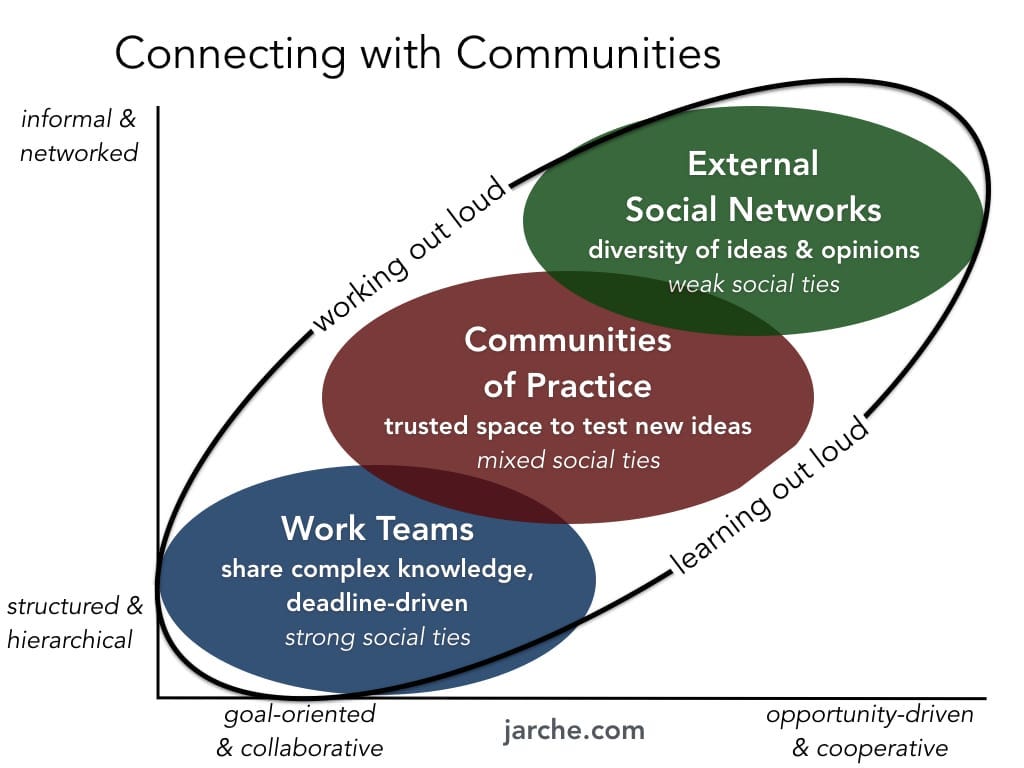
Harold Jarche’s method works because it creates a cycle. Every level feeds the others:
Your work: Working with clients and your team. This is your primary layer of expertise.
Community of practice: Your masterminds and private groups.
External social networks: This is what we’ve automated here.
Tech changes too fast for static knowledge. To stay ahead, you need a feedback loop between these three levels.
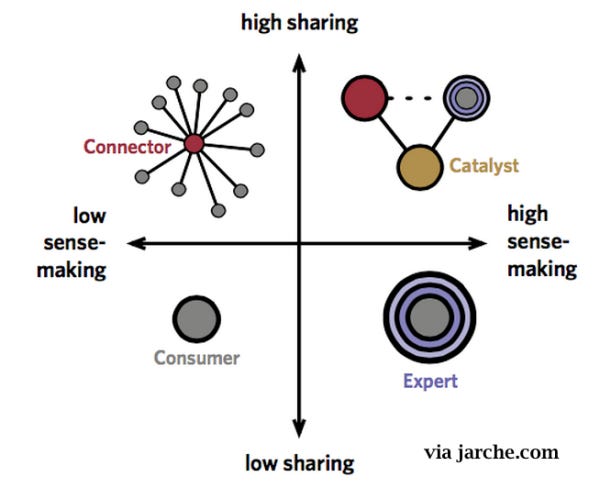
You handle the work. You discuss the details with your peers. You talk about it on social media. This positions you as the Catalyst at the top right of the following graph:
Use this workflow to handle the grunt work of searching. Use your own experience to handle the sensing.