

I launched my Founder-Led Marketing service last year.
This was my first solo service business after twenty years in content marketing and a decade managing teams.
I had to solve one specific problem: how to market a service in a way that actually reflects the work.
Put in a different way, I had to answer this question:
Years ago, I read StoryBrand. The core lesson was simple: if you confuse, you lose. Pick one narrative and stick to it. The problem is that picking any story doesn’t work. It has to be the right one.
I found it is more effective to look at a service that already works and use a three-step process to pull the strategy out of it:
Map your Big Workflow. Look at how you actually deliver results.
Extract the Big Idea. Find the underlying principle that makes that workflow successful.
Build a distribution engine. Create a system to push that specific idea into the market.
A note on context. I am focusing on service providers here. If you run a product business, the lens is different. I might cover product-led content another time.
How I See Content
This is the math of your business. You sell a service for X. The client receives 2X or 3X in value. That is the baseline.
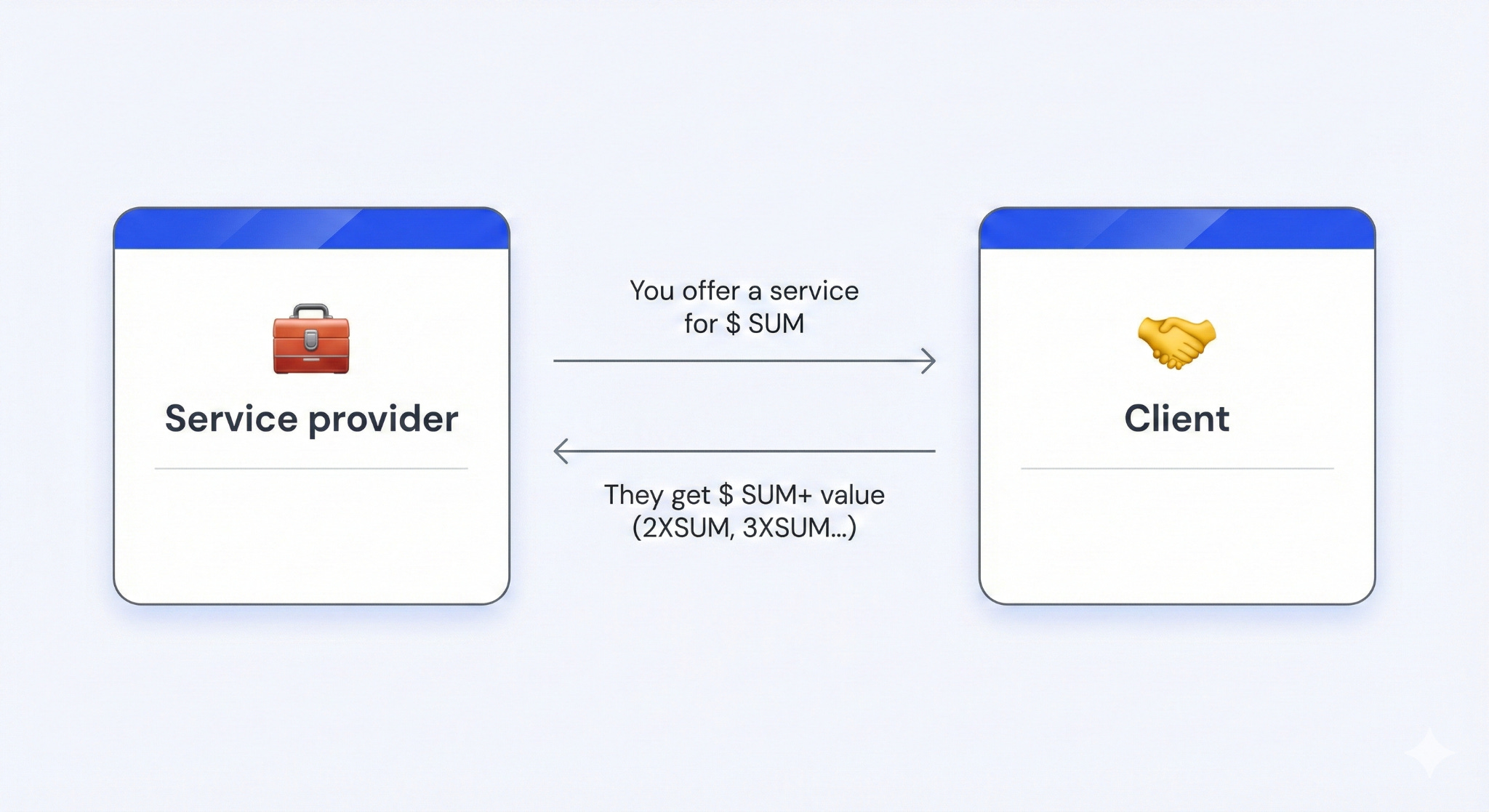
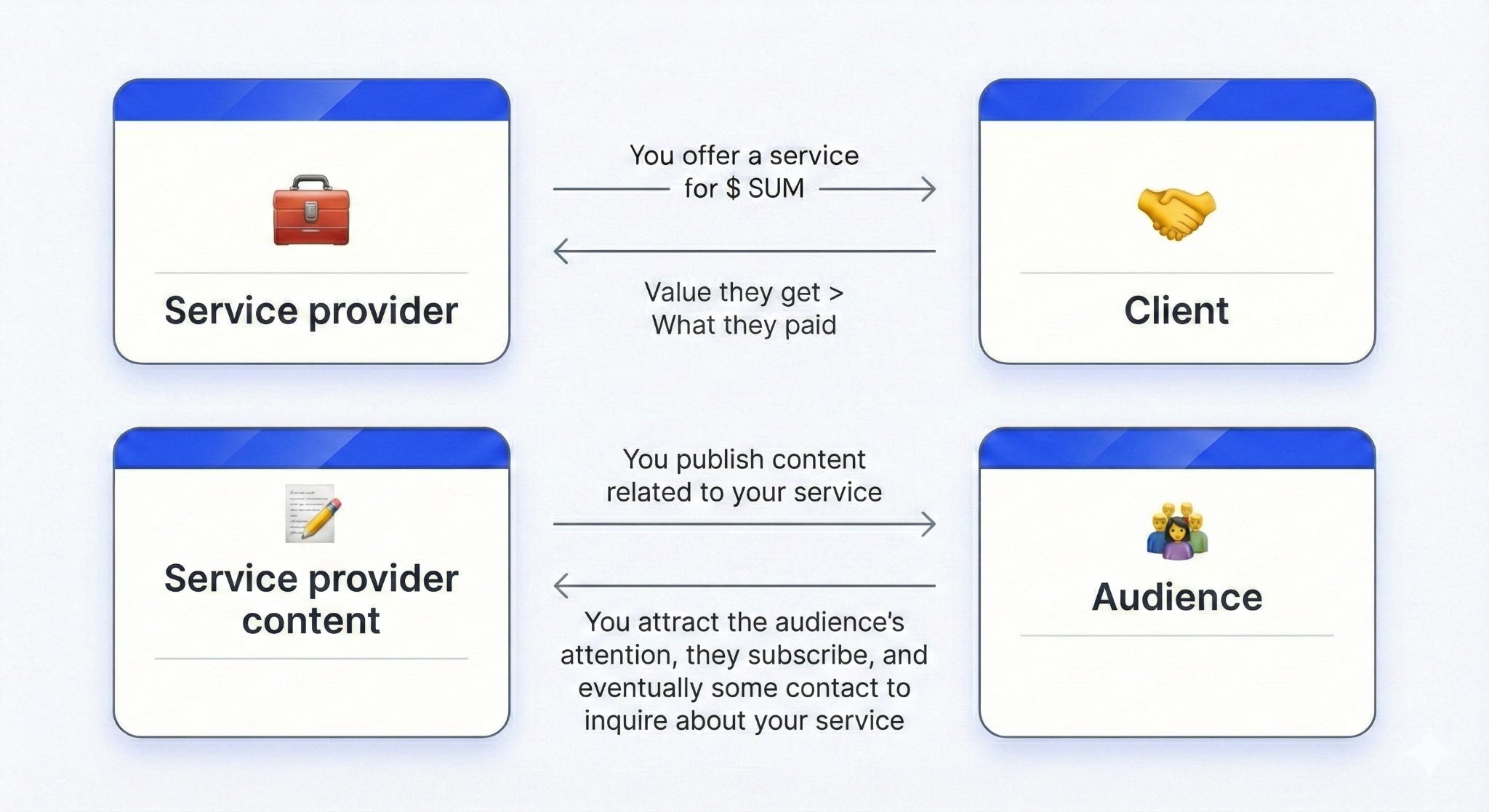
When building a marketing engine, you are adding a layer that mirrors your service. You publish content about your specific process. You attract attention. People subscribe. Eventually, some become clients.
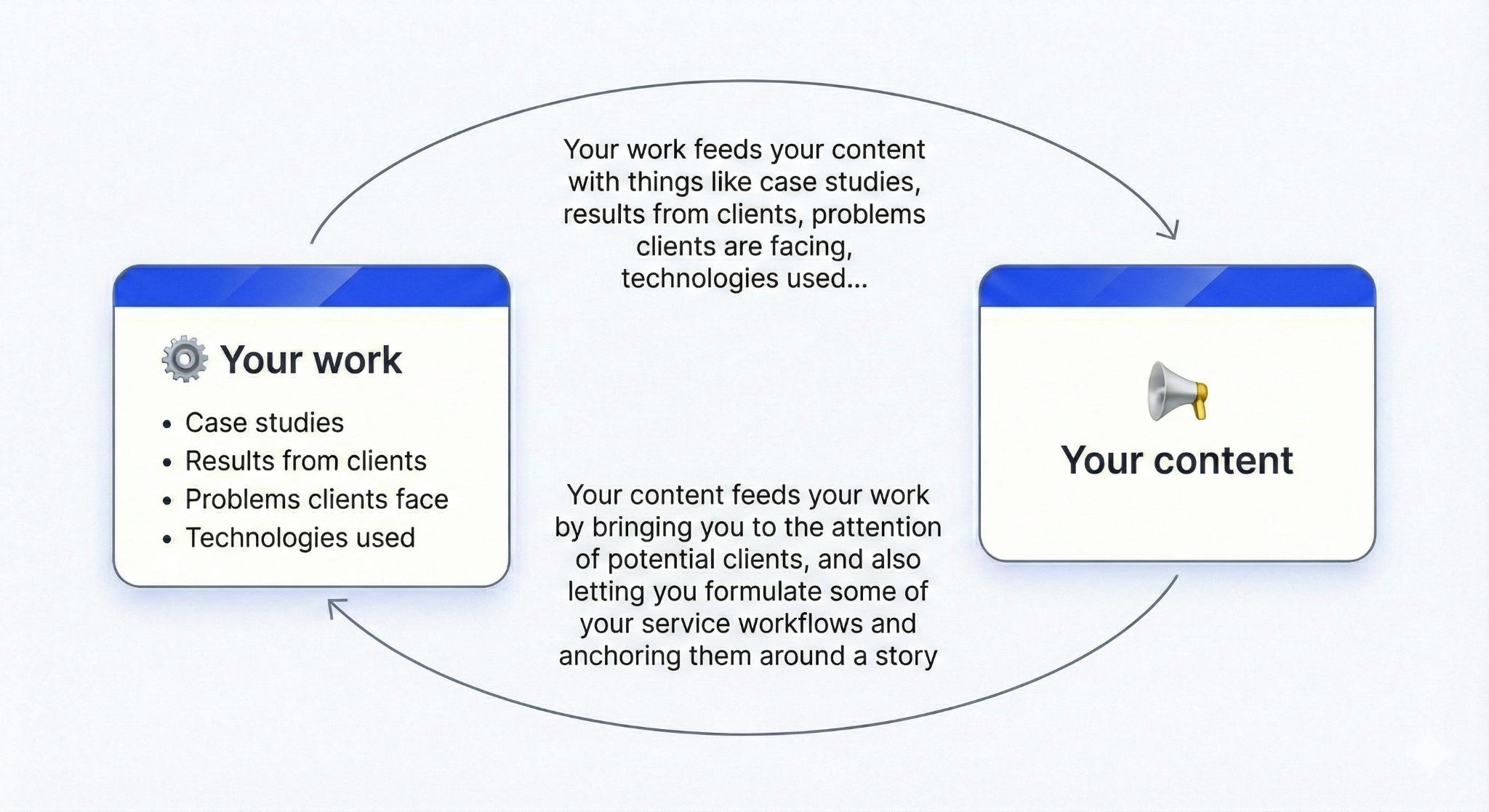
These two tracks should run in parallel. Your daily work generates the case studies, the failures, and the new methods. That material fuels your content. In return, the content brings in leads and forces you to articulate your workflow more clearly.
Most marketing advice tells you to start with your strategy. I think that is backwards. You have to start with your service, and from it figure out your strategy.
The Marketing Mistake You Might Be Making
Most marketers follow a path that ends in a hollow mission statement:
“I help [Target Audience] achieve [Desired Result] through [My Service].”
If you are an SEO professional, you end up saying something like:
“I help SaaS founders increase MRR through data-driven SEO strategies.”
Wow.
That statement lacks the detail a sophisticated client needs.
It’s helpful in some cases, but not for coming up with an actionable marketing strategy.
Instead, I suggest you start with the following first step.
Step 1. Going deep into your service
When I take on a client, we look at the mechanics of their work. This isn’t a linear journey map. It is a bird-eye view of the reality of the job.
What do you offer clients?
What’s your typical onboarding?
What are your areas of responsibilities?
What does a typical Tuesday look like?
What is the full scope of the engagement?
The goal is to produce a list of topics or statements that define your differentiation.
These are the few words that describe why you are different. Most service providers fail here. Not because they don’t have a workflow, but because they have never looked at it as the foundation for their content.
For example, here is the description for my own business workflow:
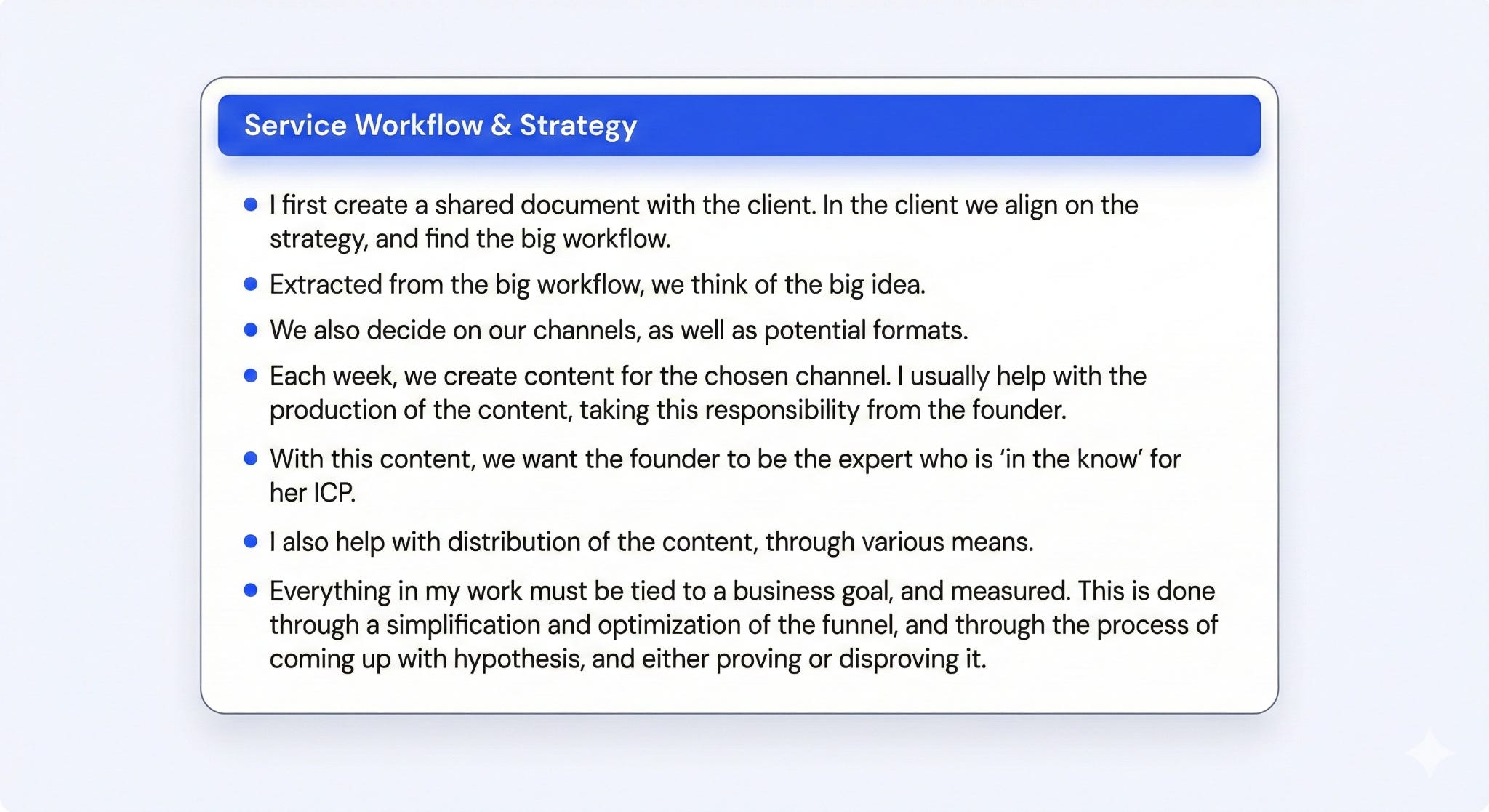
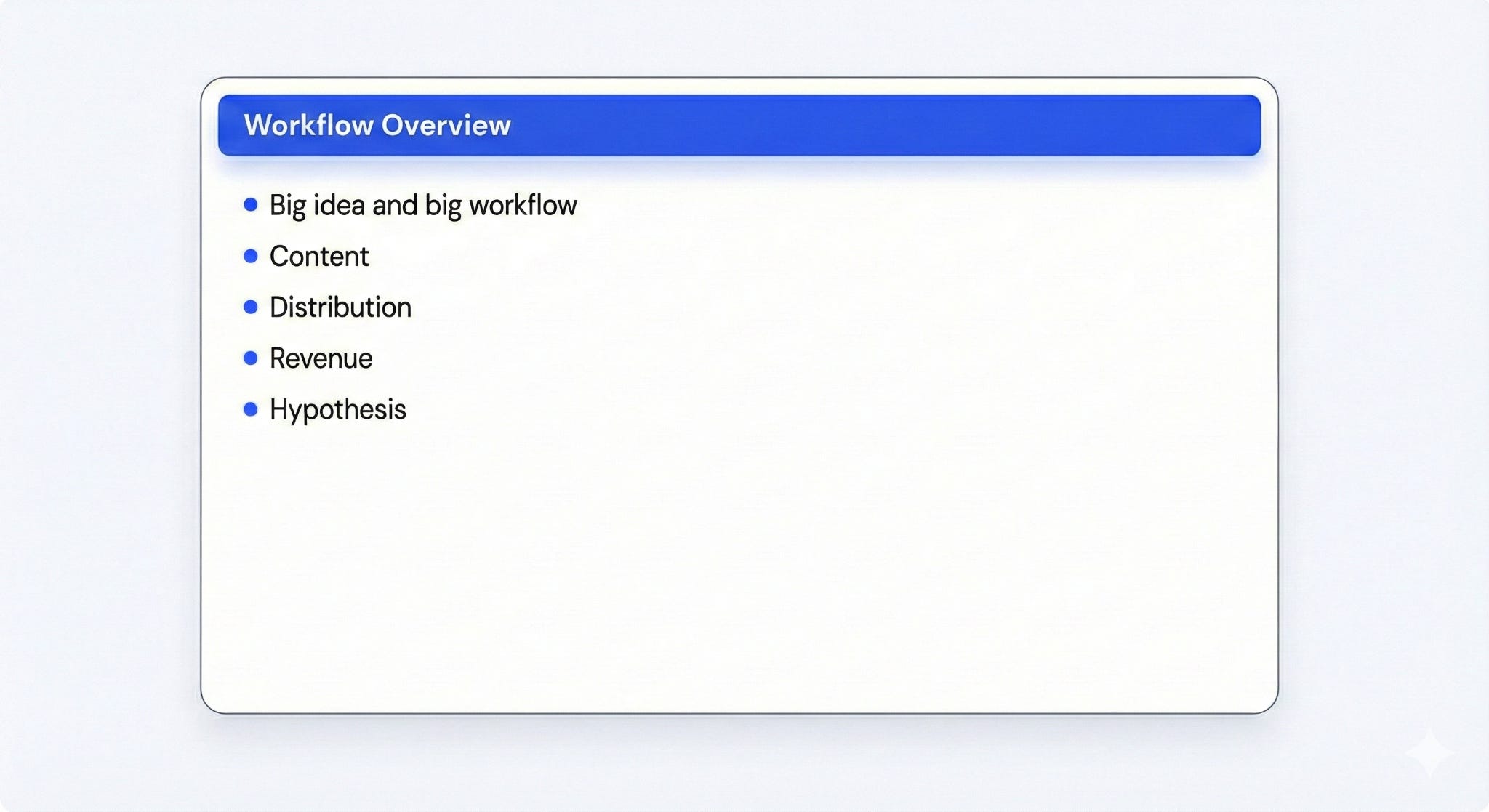
This workflow has several main areas, that are crucial for my business:
Step 2. Finding the Big Idea
Your service is likely custom and hard to summarize. That makes extracting a Big Idea difficult.
I ran my own workflow through an LLM to see what it would produce. The result was decent.
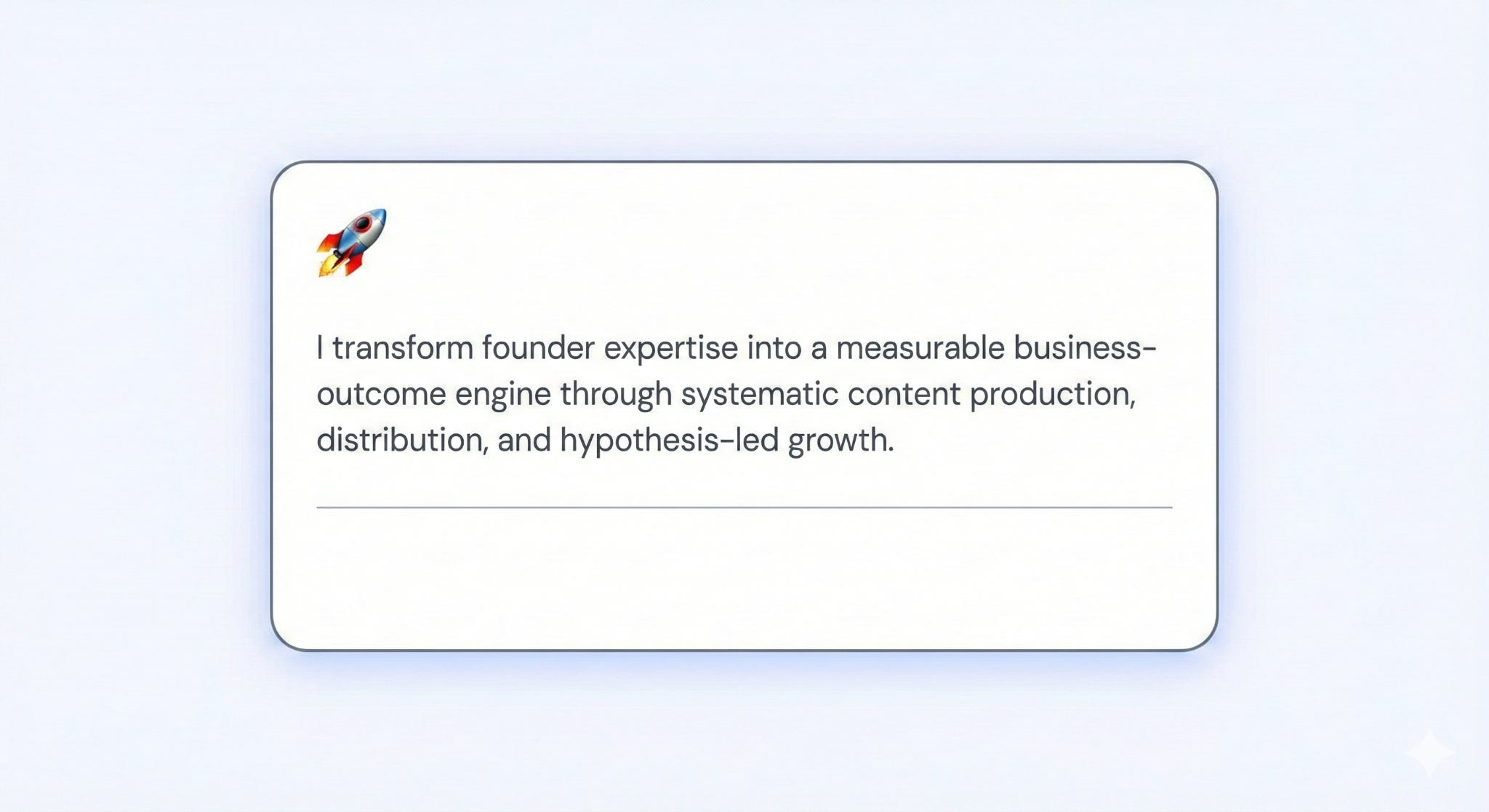
It was enough to start. But a truly effective Big Idea needs to be more contrarian. It needs stakes. The worst thing you can do in marketing is say exactly what your competitors are saying.
I use these questions to find the edge:
What do others offer that you skip. Why.
What do clients usually break before they realize they need to call you.
Which expert do you admire and what is their Big Idea.
What is the perfect recipe for your specific outcome.
What do you do that an amateur would consider a waste of time.
Who is the enemy of your client’s progress.
Why isn’t the client already doing this themselves.
What part of your process are you still trying to perfect.
What specific failure led you to this methodology.
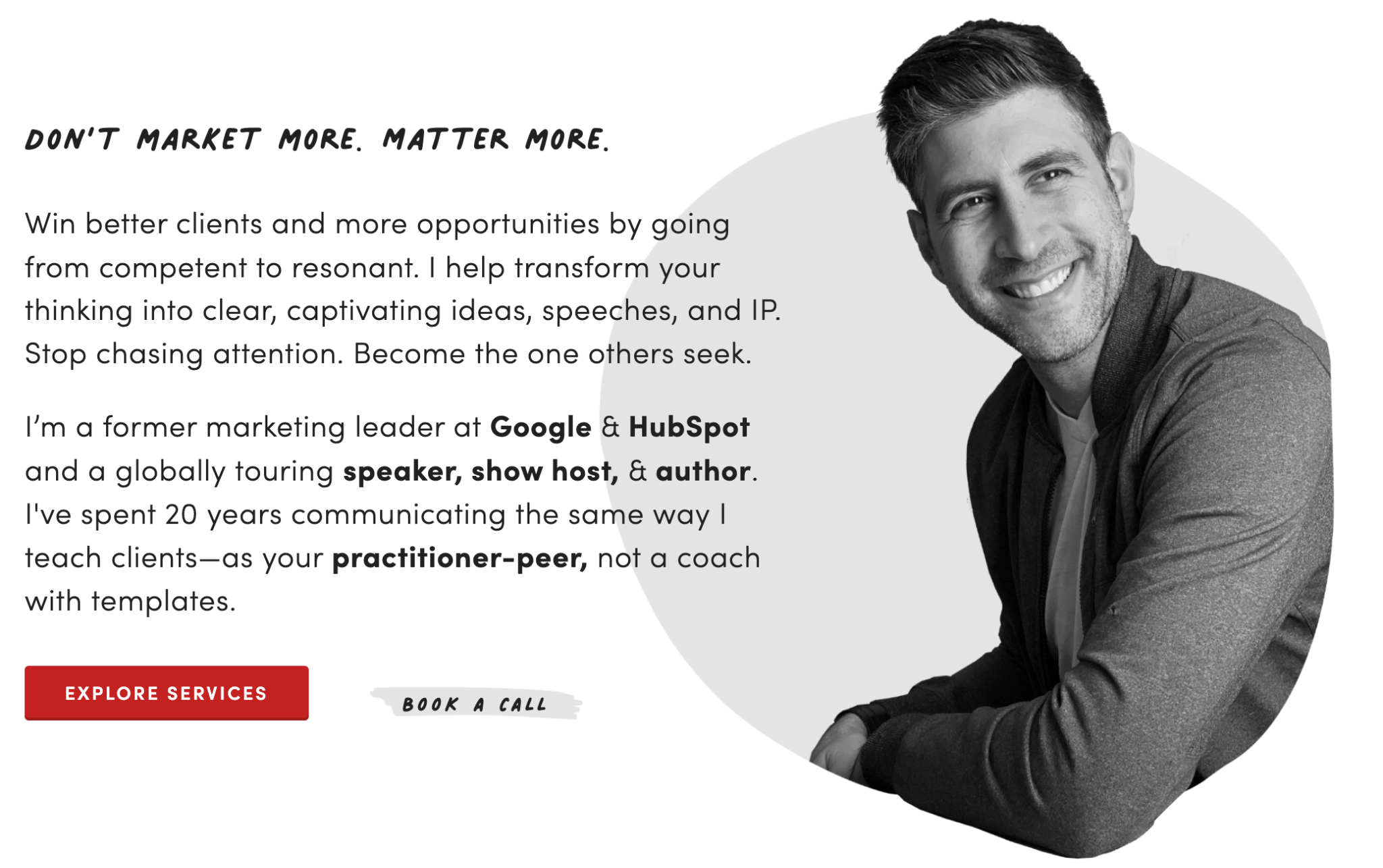
By the end of this process you should be able to come up with a big idea. A great example of this description is Jay Acunzo’s:
And another great example is the copy Erica Schneider, another content professional, uses for her business:
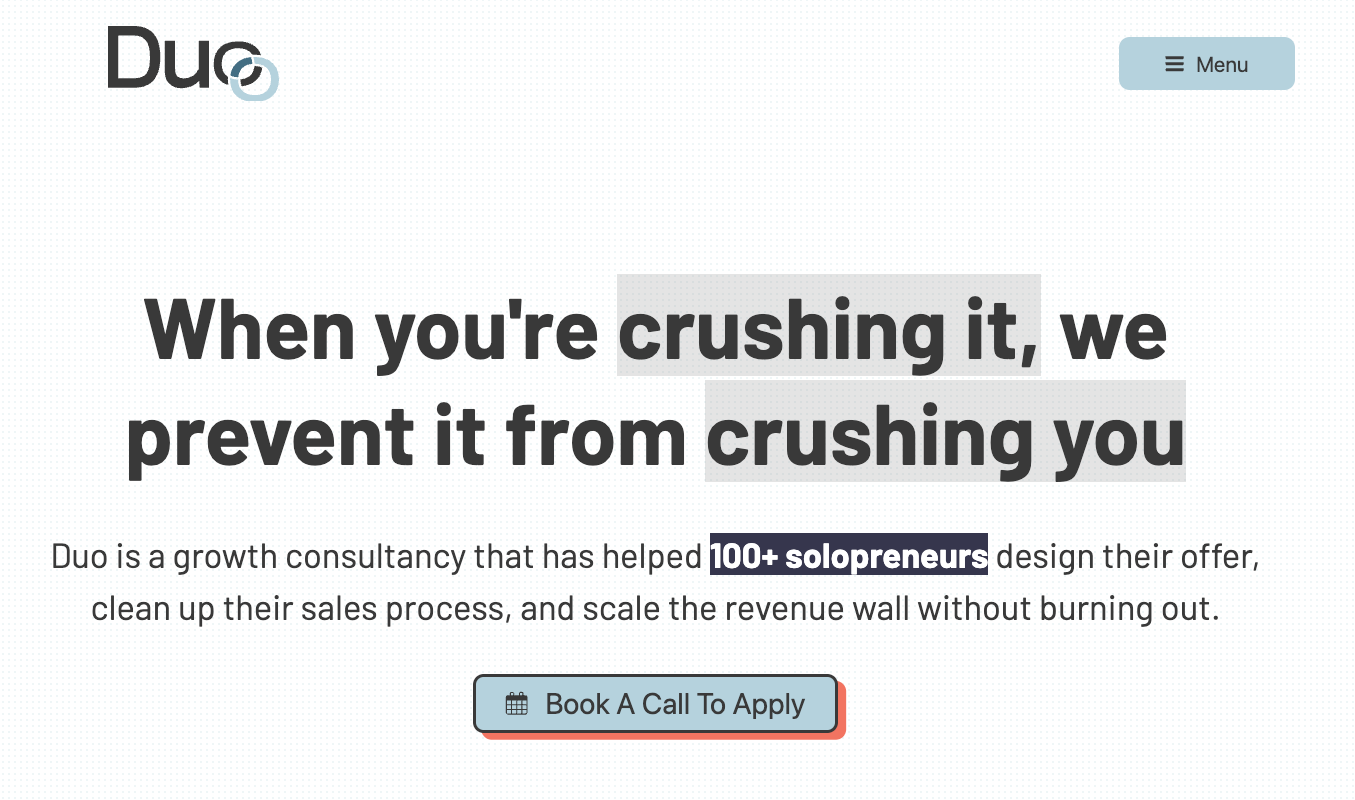
With both examples, you could almost feel that they chose these statements because it first worked for them as their service.
Step 3 - Execution
I will cover tactics later. For now, understand that content, strategy, and client work happen simultaneously. It is a constant loop.
One core idea stops overthinking. If a topic doesn’t map back to the Big Idea, kill it.
The framework is fluid. Audit it weekly, but do not scrap it for at least two months. You need enough mileage to know if it is actually failing.
This keeps marketing grounded. Your content should be a direct reflection of the work you do for clients.
It works across every channel. Use the same logic for an email or a sales pitch. It ensures you sound like the same person whether you are posting or closing a deal.
Next steps
I am actively looking for more examples to test this, not just my clients. Send over your Big Workflow and your Big Idea. Would love to audit them with you.
Most service marketing fails because it’s descriptive, not diagnostic. If your content doesn’t mirror how you actually create results, it can’t attract the right buyers. :)