

Every time I see a post about successful LinkedIn content strategies for CEOs, it’s always the same content, advocating mixing a variety of formats meant to prove your expertise. Formats like testimonials, personal stories, and data-based insights.
This advice misses the mark, because it’s the most generic advice, and produces a CEO profile that looks like everyone else’s.
The other common advice I see advocates a single content type, like “The framework carousel,” promising that this format will serve as the ultimate driver of growth.
This was hilariously criticized on LinkedIn by Magali De Reu, showing various profiles using the same content template:
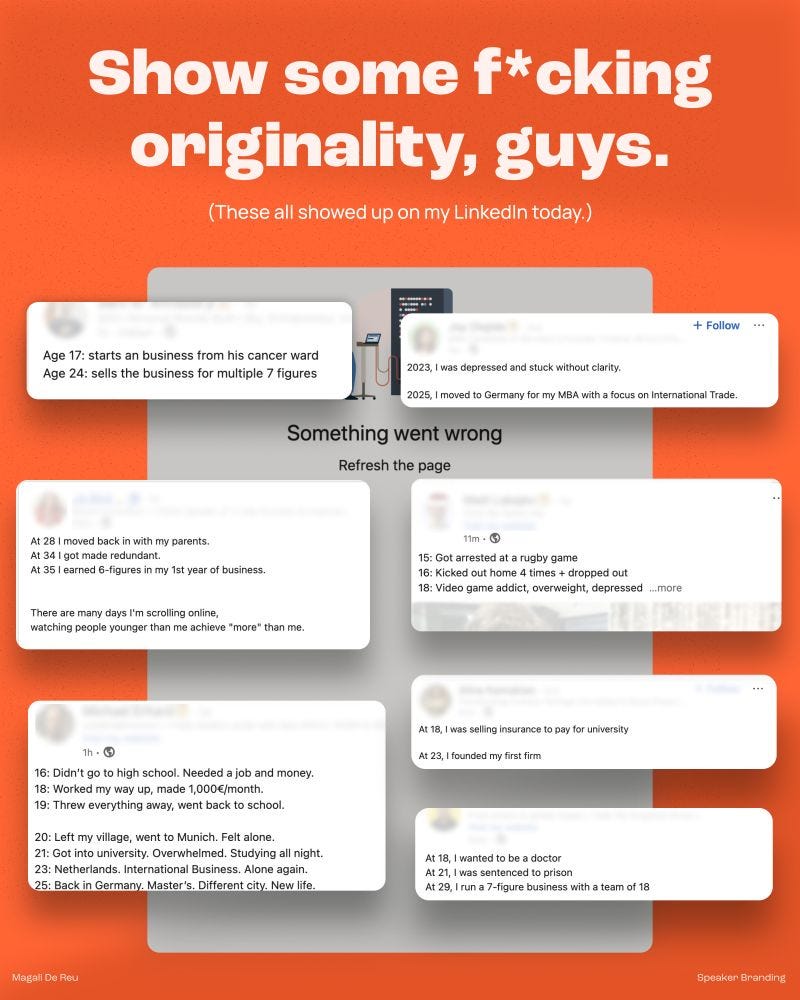
Following the logic of both types of advice, you either try to build this perfect mix of generic posts, or pick one post that seems to be working extremely well.
In both cases, they lack the differentiation that’s really needed to build a successful content effort.
The missing link
What is missing is the fact that most successful creators rely on a single repeating anchor that serves as their core focus.
To find out what these anchors look like in the real world, I recently analyzed dozens of LinkedIn profiles from Sales and Marketing SaaS CEOs.
I discovered five distinct strategies, each offering a completely different direction for your brand.
The product / work scale
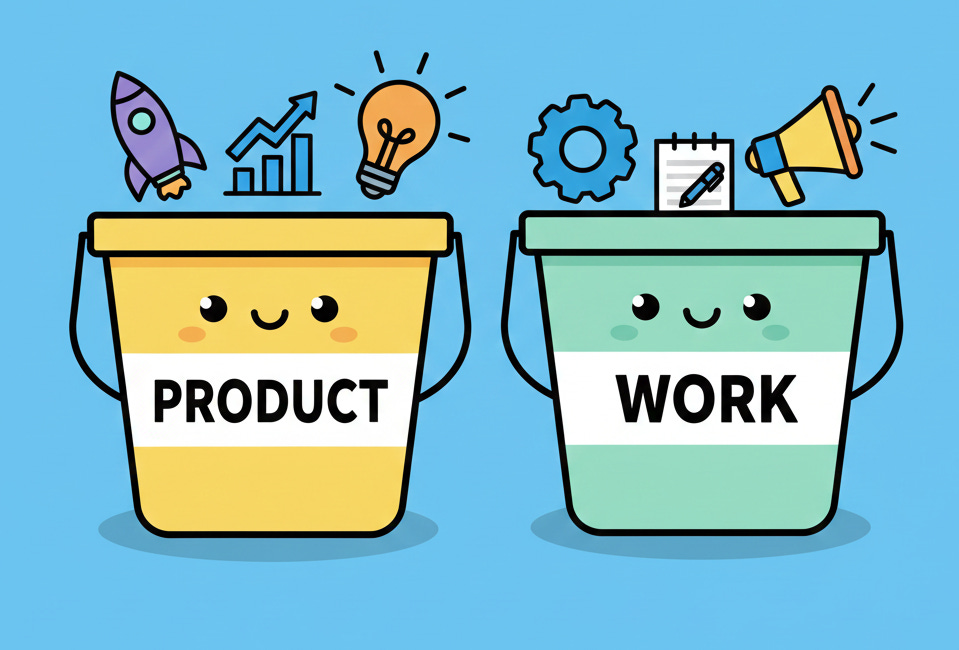
There is one foundational question you must be able to answer before committing to publishing on Linkedin:
Are you going to focus on your product, or on your work?
Every one of the five strategies falls squarely into one of these two buckets. Until you pick a side, your content will likely feel scattered and your brand will remain diluted.
#1 Focusing on product + industry
The "In-The-Lane" specialist
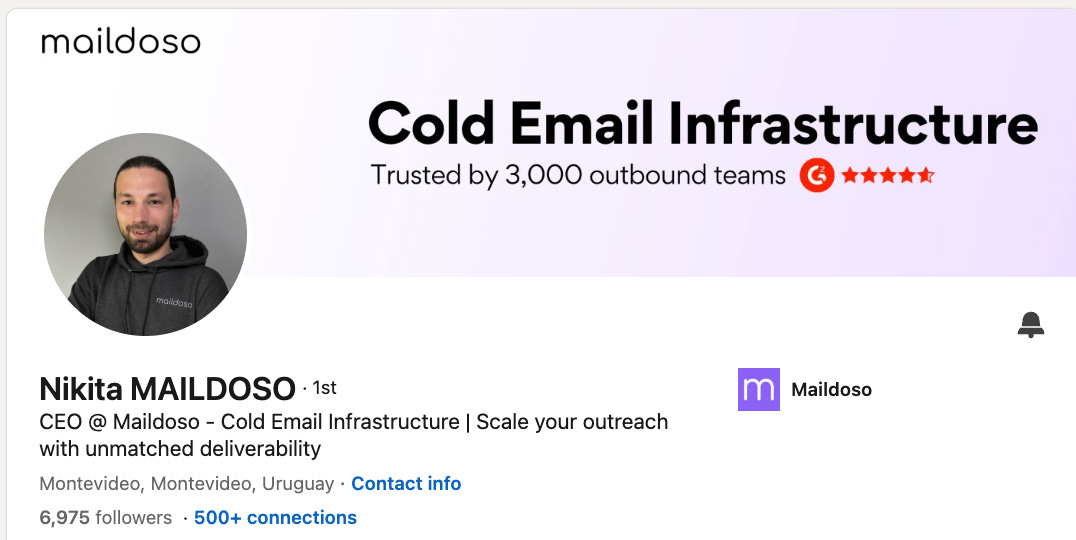
Nikita Maildoso decided to focus his Linkedin content mostly on the highly technical and rather dry topic of email deliverability. While he occasionally branches into broader email outreach, he stays pretty much “in his lane.”
Last year, I happened to manage a marketing project for a similar email deliverability tool, so I know firsthand: it is not easy to stay disciplined enough to produce consistent content on a single technical niche.
Who should use this strategy?
The three main difficulties in executing the In-The-Lane strategy are:
Monotony: You (and your audience) can get bored with covering the same technical topic.
Reach: It’s harder to attract broad awareness than with content that’s only about a limited subject matter.
Depth: As a CEO, your work usually revolves around different operations: sales, marketing, hiring and so on. This makes it harder to maintain a relevant and updated expertise in what your product does.
So why choose this? This strategy works because it positions you in a space with minimal competition.
While most creators chase broad appeal, few are willing or able to “talk shop” at such a technical level.
Because the content remains directly related to your product, every post attracts high-intent prospects rather than passive lurkers.
What is Nikita doing to win this strategy?
Nikita wins with this strategy by moving beyond the typical “how-to” or “POV” posts. Instead, he leans into these unique formats:
LinkedIn Live Reviews: Hosting “Fix My Cold Emails” sessions where he performs live expert audits.
Client Proof: Sharing email performance statistics that demonstrate the direct impact of his technical approach.
Real Business Stories: Nikita often shares transparent stories that happened to his company, including the “bad things,” like his company getting blocked.
Example of his work
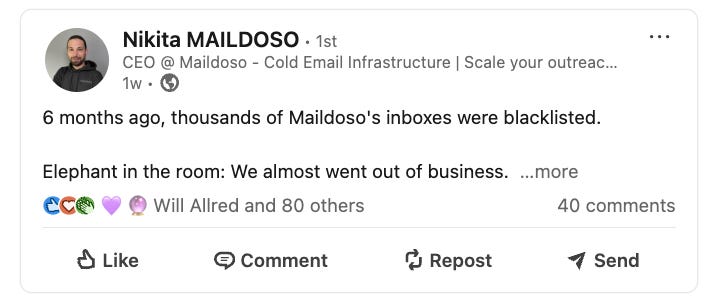
In the example below, Nikita shares a vulnerable moment where his inboxes were blacklisted.
Your takeaway: If you meet these three conditions:
Long-term interest: You can stay engaged with this niche topic over the long haul without burning out.
Defined audience: You can identify a specific community that truly cares about the technical nuances of your field.
Format innovation: You are willing to move beyond generic tips that anyone (or any AI) can generate.
then you should adopt this strategy. It offers a much higher probability of building genuine authority and becoming the go-to expert in your category.
#2 Focusing on product + features
The Feature Documentarist
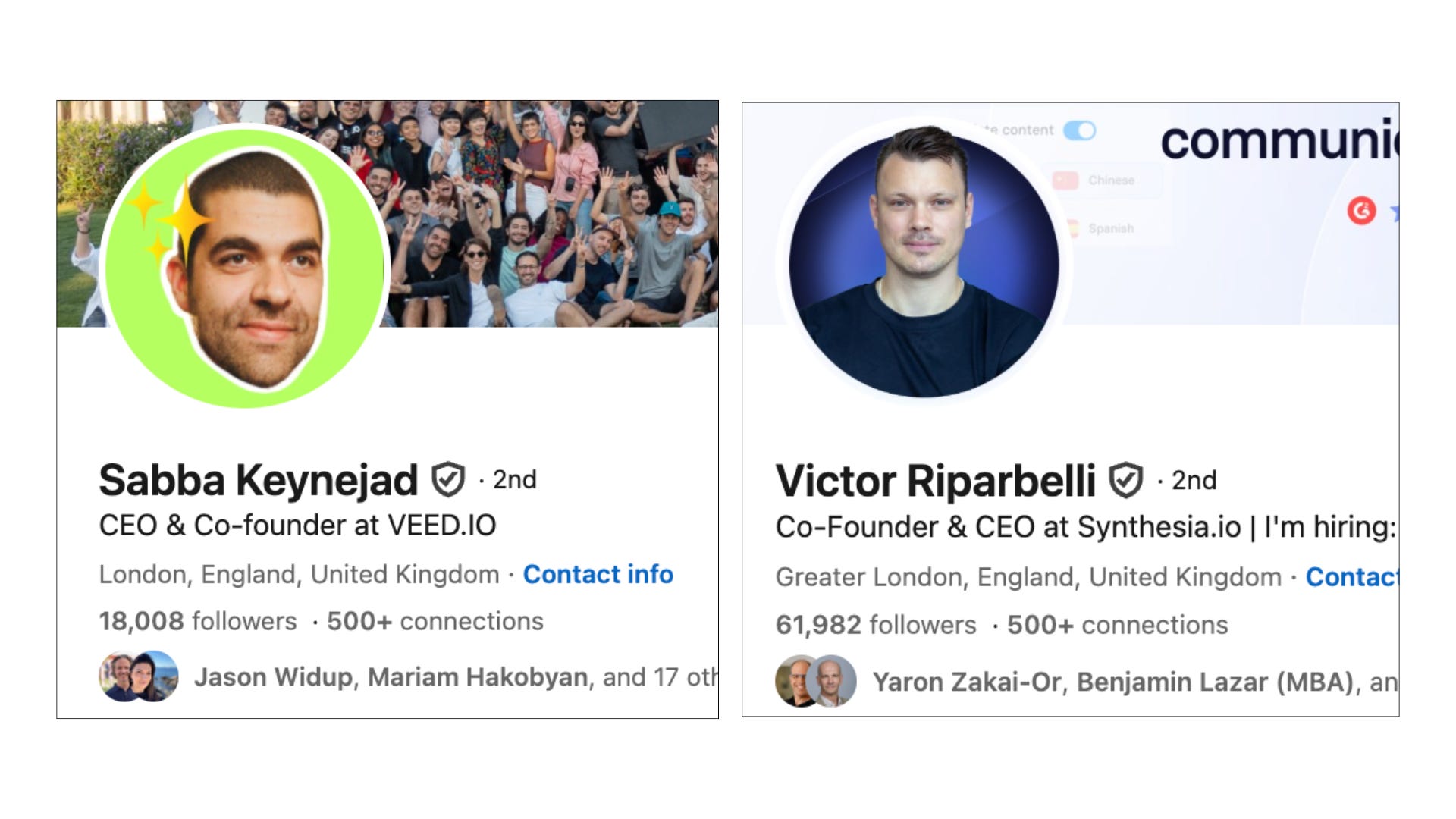
Sabba and Victor are two profiles that don’t look like your typical CEO feed.
Sabba has hundreds of likes per each one of his posts, even though they mostly deal with the latest feature his video SaaS product has shipped.
Both CEOs use the fact that their products are highly visual and cutting edge. They don’t need to toil too much on figuring out their thought leadership angle.
Who should use this strategy?
The biggest advantage of this strategy is that it’s perfect social selling. The link between a new feature video one of them shares and actual product conversion is very strong.
Why NOT to use this strategy
This strategy is definitely not a good fit for most products, because most products lack the internal appeal to make feature releases exciting enough to draw a crowd.
Also, if you only post updates, you risk sounding like a changelog rather than a human.
The advantage of the strategy is that it is pretty straightforward to follow it, and requires minimal effort.
What are Sabba and Victor doing to win this strategy?
Both founders are doubling down on video content, producing high level videos that are beyond simple talking heads.
Example of Sabba’s work
In this post, Sabba is showcasing the latest release by Veed.
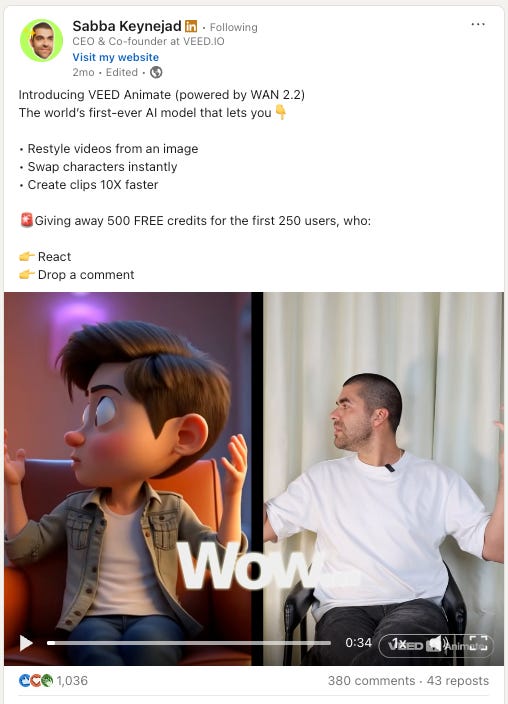
Your Takeaway: If your product is highly visual or you are constantly shipping, make your profile a showcase.
#3 Focusing on work + transparency
The Builder In Public
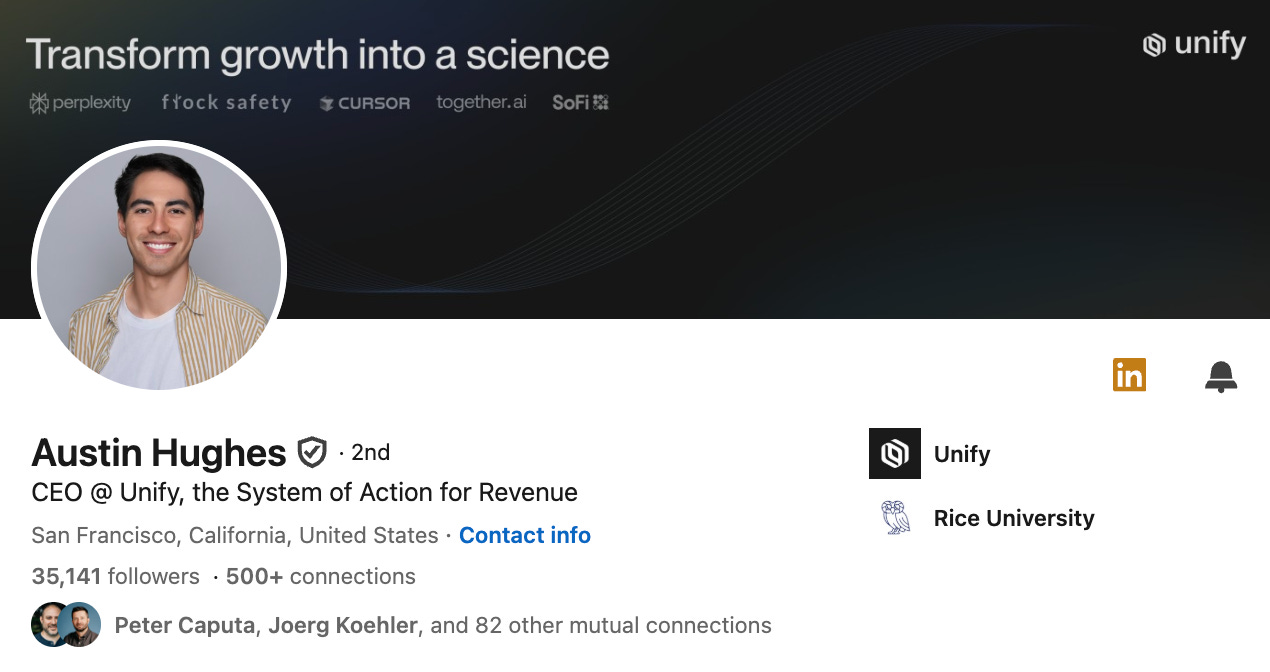
The concept of “Building in Public” didn’t start on LinkedIn. It was originally coined by Joel Gascoigne (CEO of Buffer) around 2010. It came to stand for a founder sharing everything that happens in the business, including raw revenue numbers, with radical transparency.
Austin Hughes, CEO of Unify, makes you feel like you’re sitting in the boardroom with him. He shares real-time insights from various departments in his company, whether it’s sales, engineering, or marketing.
Who should use this strategy?
Building in public is effective, especially if there is alignment between what you build and what your ICP wants.
If you are building a fintech app and your audience are CFOs, they won’t care about you sharing the latest marketing project you launched.
If you are building a revenue app and your audience are sales people, they might be interested in hearing how you landed your client on the first sales call.
This alignment is necessary, but doesn’t always have to be a direct connection.
In future posts I might talk about how to focus on the build in public strategy even if the alignment is not perfect.
Besides founder / ICP alignment, another challenge with this strategy is that there is market saturation. The more founders adopt “building in public” the harder it is to stand out.
What is Austin doing to win this strategy?
I truly think Austin is a master at this strategy. Most CEOs who try building in public hit a wall because they stay in the “I ran a meeting. It was nice.” phase. They share what happened without digesting it into a story or finding a hook that resonates with people. Austin manages to do that with every post, even a simple one about onboarding a new employee.
Example of his work
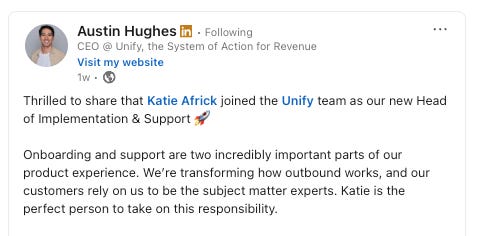
Your Takeaway Thinking of going the “build in public” route? It looks simple, but it requires a high level of discipline. Only do this if you are comfortable with the “glass box” approach to leadership.
#4 Focusing on work + frameworks
The Framework Finder
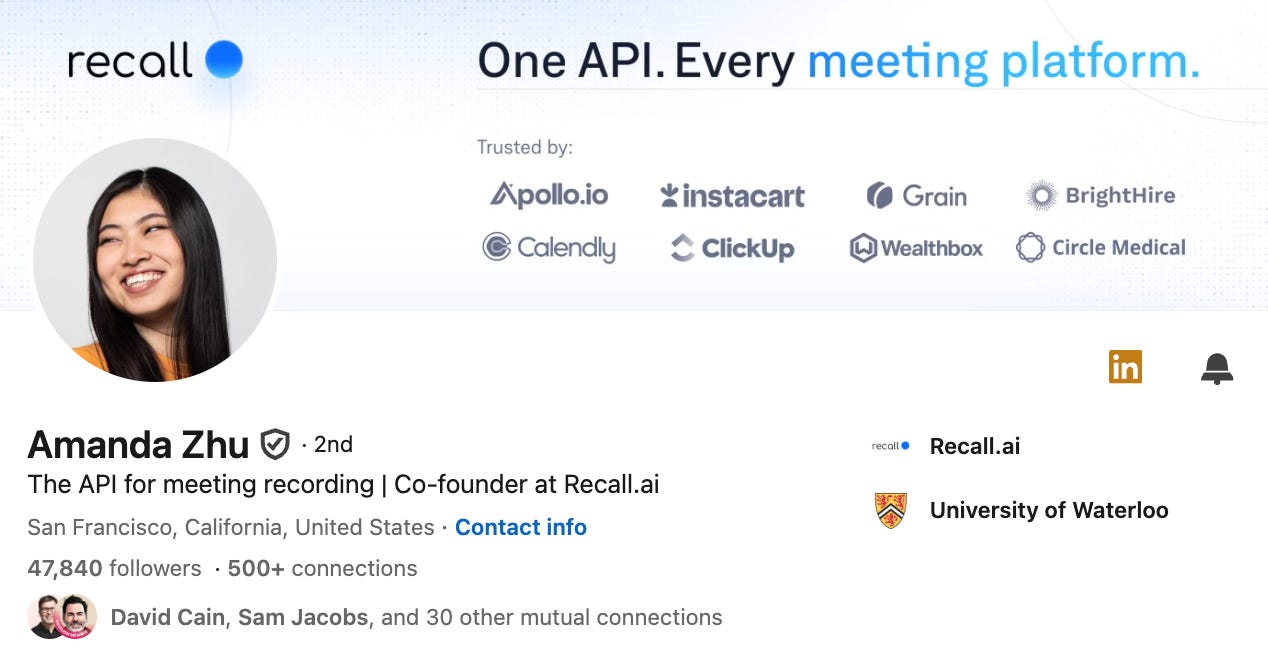
Amanda Zhu, Co-founder of Recall, is a master of codifying the messy parts of a startup into proprietary systems. She doesn’t just say “we hired someone”; she breaks down the 5-step logic gate she used to filter candidates.
Who should use this strategy?
Sharing systems positions you as a high-authority figure. It is also an incredibly efficient use of your time, as it allows you to turn your internal Standard Operating Procedures (SOPs) into valuable marketing assets.
Furthermore, these frameworks have high virality potential; people naturally love to save structured systems.
However effective, though, there are hurdles in implementing this strategy:
It requires a high level of analytical thinking to produce a usable framework.
It can feel cold or academic if not balanced with some personality.
Example of her work
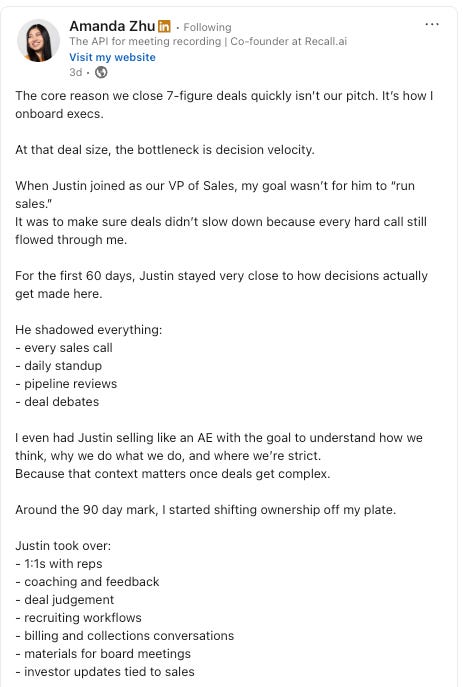
Your Takeaway: Are you a systematic leader who thinks in workflows? This strategy will allow you to share your internal playbooks publicly.
#5 Focusing on work + personal
The Raw Observer: Bethany Stachenfeld
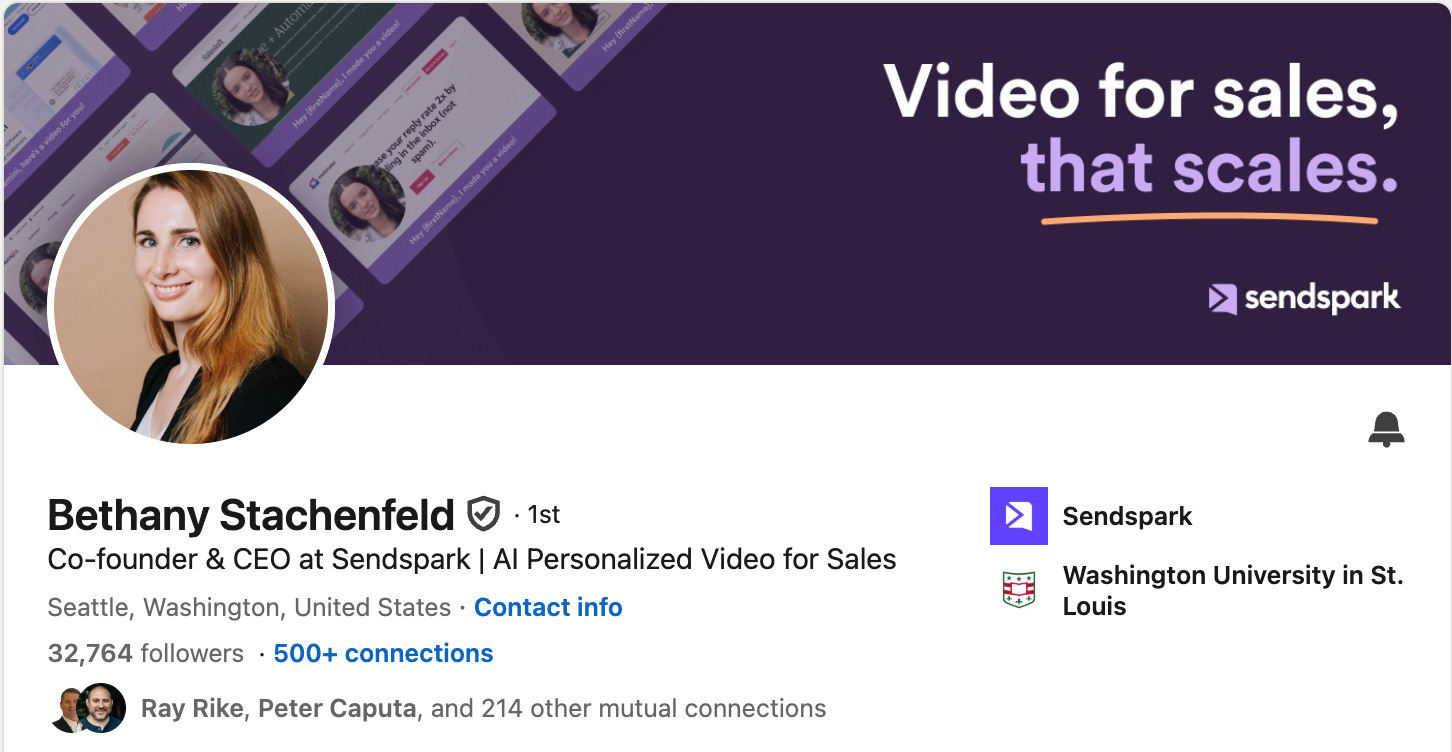
Bethany wins through radical honesty. She shares reflections that aren’t always on-brand or perfectly polished. She might talk about burnout, a bad day, or a weird realization that has nothing to do with her business.
Who should use this strategy?
This kind of strategy reminds me of the old blogging days, when we would document our experiences.
Back then, there was more demand for this type of “Carry Bradshaw” style writing.
I think this kind of strategy works for a select few, who manage to gain a following interested in whatever they post. They might veer off course, but it makes their content much more diversified and human.
Example of her work
I love this post where she shares the message the person whose car she hit sent her, mentioning she uses her product:
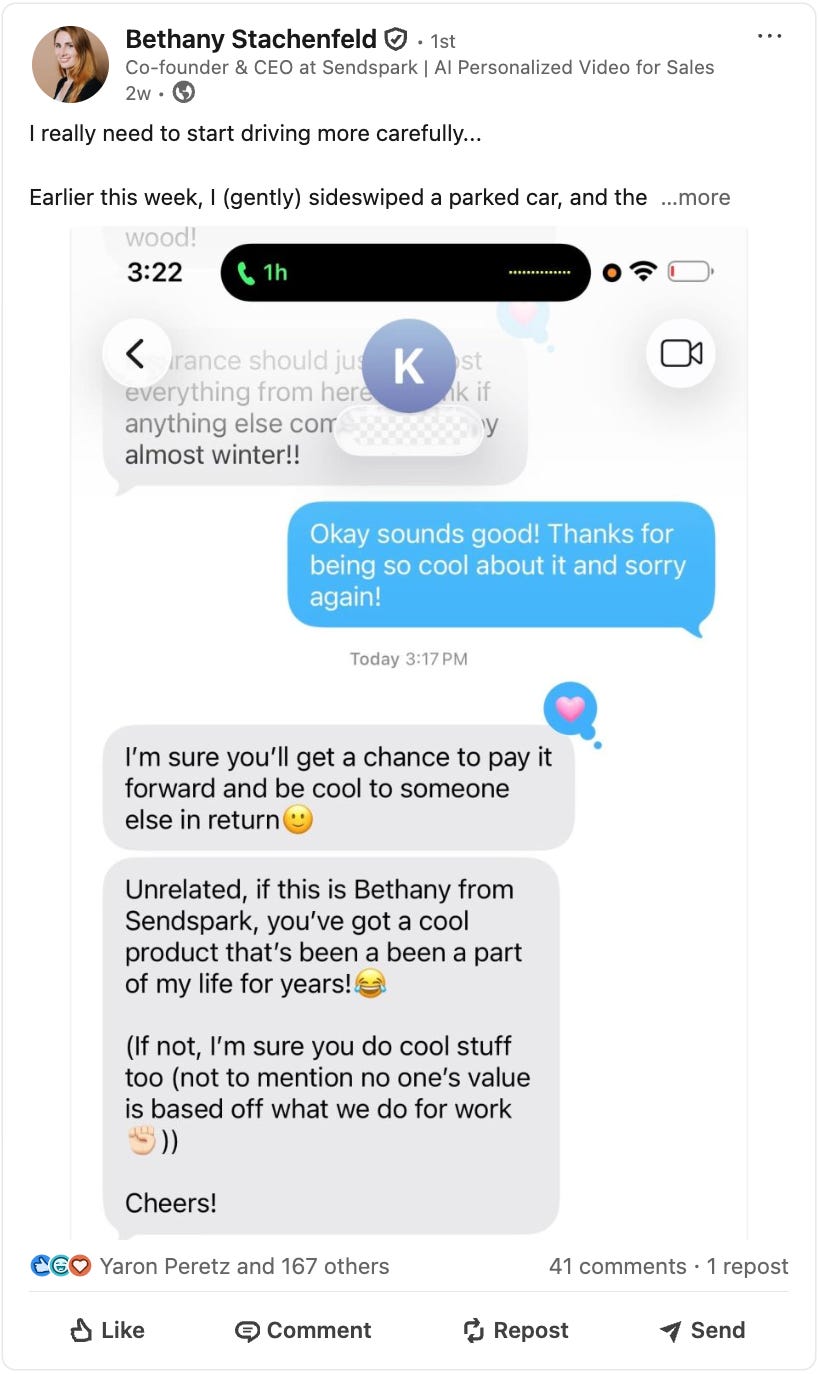
Your Takeaway: If you are deterred by the “ego-boost” style of LinkedIn, sharing these raw takes might be a better fit. It’s for the founder who wants to build a brand based on who they are, not just what they do.
Your turn
I don’t think these are the only strategic possibilities for founders, but they are quite different from the regular CEOs posting POV posts and not getting any traction. If you sit down to write “this is what I think CEOs should care about”, it is not likely these posts will succeed.
If you have any thoughts…share them in the comments below. We’d love to hear what you think.
And that is a wrap on how the top CEOs win on LinkedIn.
I truly appreciate you spending your time here, and I hope you’re walking away with some ideas for your own content.
This deep dive into founder-led strategies was a fun one. 🫡
Before you go: If you haven’t yet, make sure to subscribe to the Founder-Led Marketer to get these systems delivered straight to your inbox. And if you found this analysis helpful, share it with a founder who’s tired of chasing the algorithm.