

Recently, a client came to me with a sudden surge of ambition. Because a crisis had broken out in Israel and everyone was suddenly stuck at home, she saw a massive opportunity for audience attention. Her proposal was to shift our manageable weekly video strategy to producing daily videos.
I knew one of the areas she usually needed my help with was prioritization and avoiding over-commitment, so I asked her:
“Can you sustain the marketing system we built with peace of mind, without stressing yourself out?”
Drawing on her past experience, she admitted the answer was no.
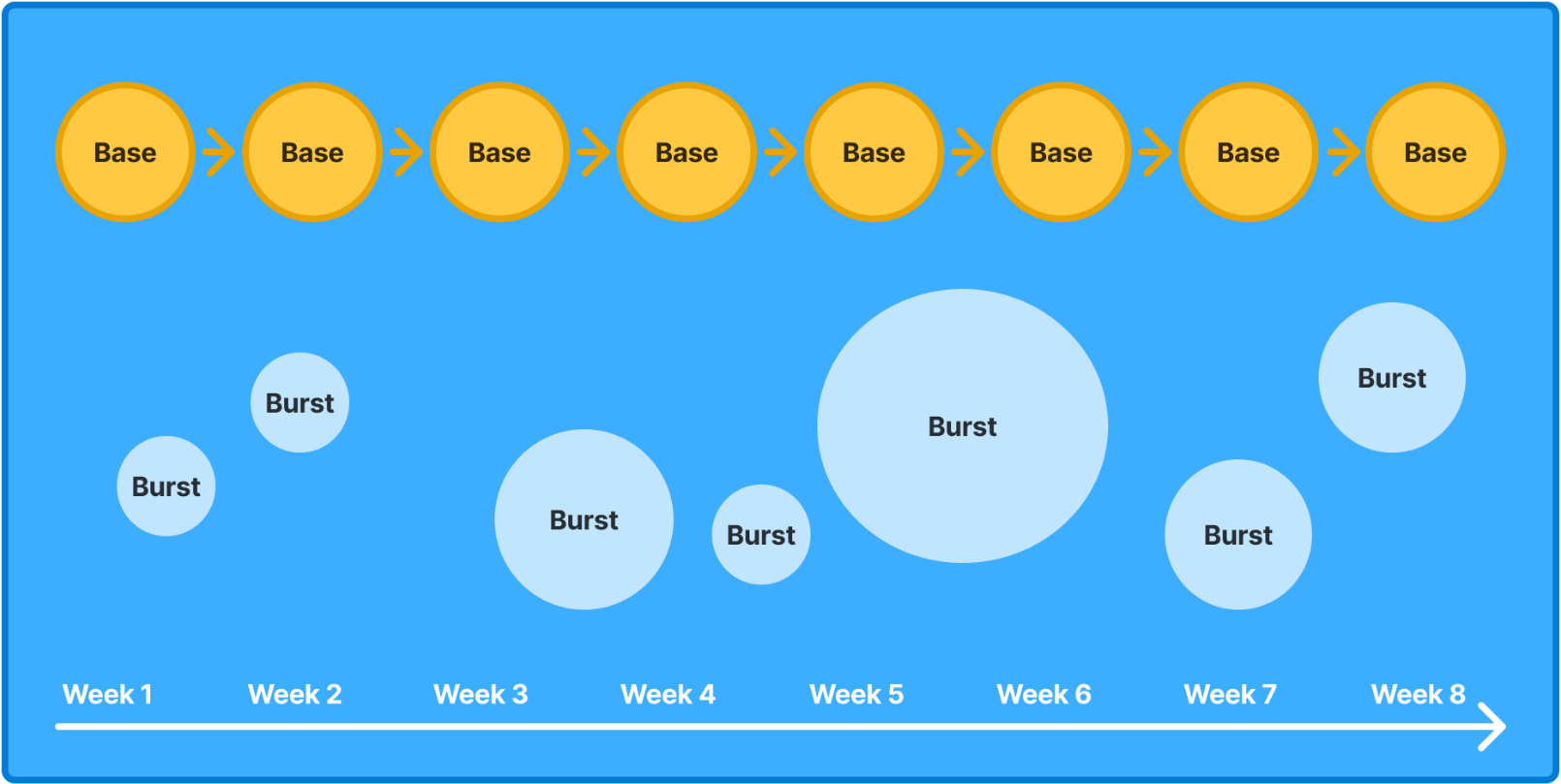
This is a classic issue for ambitious business owners. When opportunities arise, the internal voice says, “I can do it all!” But attempting to sustain maximum output indefinitely is the fastest route to burnout. To solve this, I introduced her to the concept of Base and Bursts.
It is a framework designed to harness opportunistic energy without destroying the marketing system (or the creator’s sanity) in the process.
The problem: The spontaneous founder
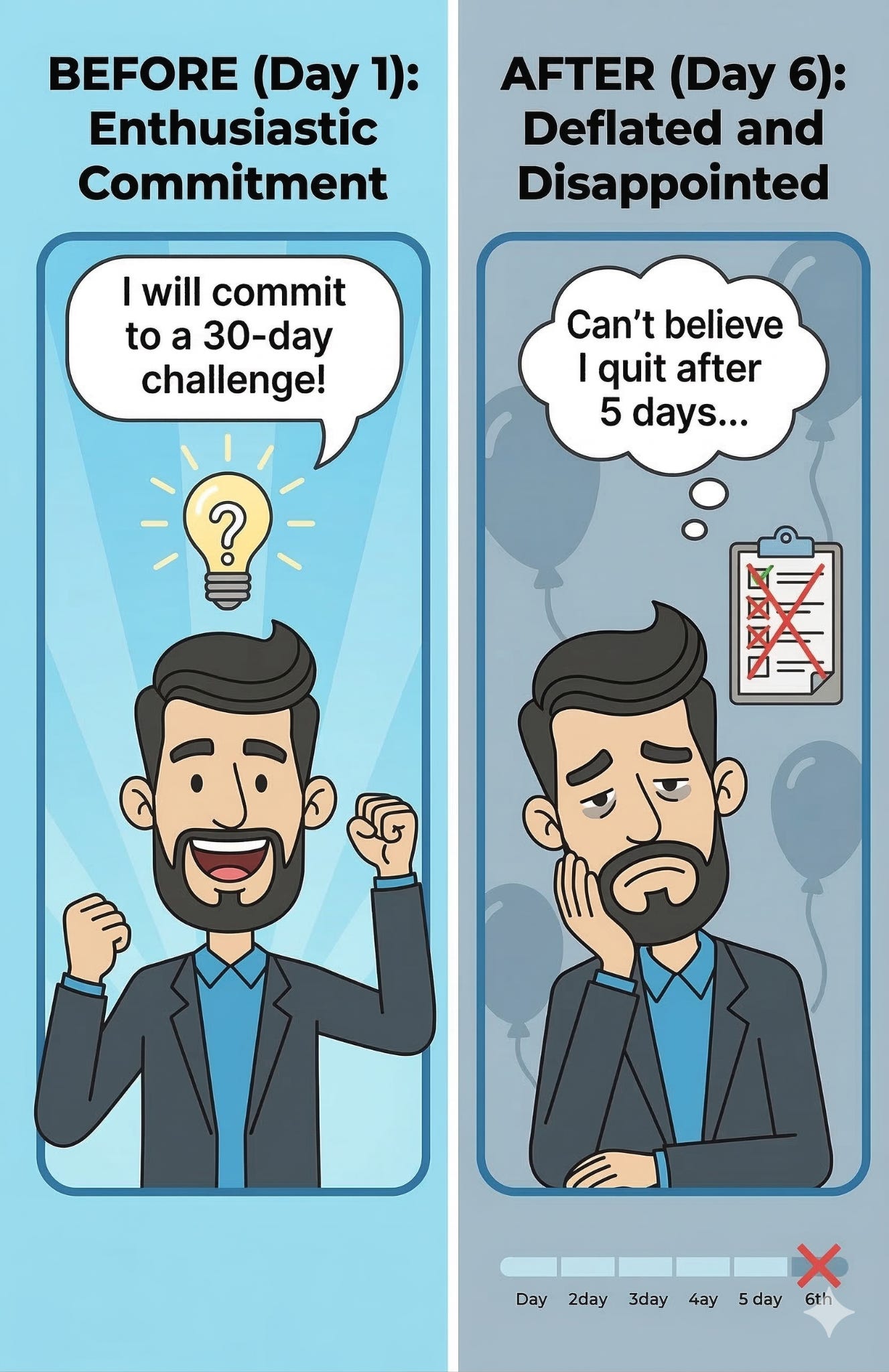
In founder-led marketing, the most common point of failure is inconsistency. Founders often fall into the trap of the spontaneous founder. They get a spark of inspiration from a major event, a feature launch, or a sudden market opportunity, and they post raw, real content at a furious pace.
But inspiration fades. The workload of actually running their business catches up with them, and they disappear for six weeks. When they finally return, they have to rebuild their audience’s trust from scratch.
To avoid this crash, you have to separate your content strategy into two distinct gears: The Base and The Burst.
The Base (Your non-negotiables)

Your Base is the foundational content you can easily commit to, no matter what happens. It is the absolute minimum viable output you can maintain even during a stressful, hectic week.
For my client, this was one IG video and one newsletter per week. Because she was managing this as a side hustle alongside another business, we committed to a schedule that allowed for steady growth without the strain.
Why the Base matters:
It requires minimal time: A proper Base should only demand a 1-to-3 hour workweek from the founder.
It builds the primary ROI milestone: In content marketing, the first milestone of ROI is simply hitting your outputs by committing to a consistent publishing cadence.
It protects against “AI Slop”: When founders overcommit, they inevitably look for shortcuts, usually by outsourcing their voice to an AI ghostwriter. A manageable Base ensures you have the energy to keep your content authentic.
It creates a safety net: Your Base acts as a constant layer of consistency running in the background, making every other part of your business—from sales calls to outreach—easier.
The Bursts (Your calculated experiments)
You do not have to operate at your Base level forever. Once your baseline is running smoothly, you can integrate Bursts. A Burst is a high-energy, one-off activity or experiment that you execute without making a long-term commitment.
Burst Ideas:
Going on a podcast circuit.
Attending or speaking at a conference.
Running a 5-day “Behind the Scenes” photo series.
Hosting a one-off webinar or lecture.
Why Bursts work:
They have an expiration date: Because a Burst is a defined experiment, you know exactly when it will end. You can push hard because you aren’t committing to this pace for life.
They test the market: Bursts act as scientific hypotheses to see what captures your audience’s attention.
They relieve guilt: When the Burst is over, you simply drop back down to your Base. There is no guilt about failing to keep up a daily cadence, because daily was never the permanent goal.
Measuring Bursts: Looking for the smoke signal
Unlike your Base, which is measured by long-term consistency, a Burst is a one-off. You aren’t looking for a permanent plateau change, you’re looking for a disproportionate reaction. Use this three-step signal check to measure a Burst effectively:
The initial Hypothesis: Before you start, define success in one sentence: “If I do this 5-day daily video sprint, I expect to see a 10% spike in profile visits compared to my average week.”
Qualitative smoke signals: Look for outliers in engagement. Are people asking high-intent questions in your DMs? Is the comment section more busy than usual? Are you suddenly attracting a different tier of followers (e.g., more CEOs or peers)?
The Base Impact: A Burst should feed your Base. For example: If I go on three popular podcasts (The Burst), I track if my LinkedIn followers and sales pipeline (The Base measurements) see a noticeable bump during that window.
At the end of every Burst, ask yourself:
Did the Smoke Signal justify the extra hours spent?
Should this Burst stay a one-off, or has it proven valuable enough to be promoted into my permanent Base?
When to Initiate Bursts
While psychological and motivational factors play a huge role in timing, keep an eye out for these external green lights:
Market trigger: A trending news event or industry shift.
Product trigger: A new feature or offer launch.
Energy trigger: You have a light month and feel a genuine creative itch.
The 80/20 Rule: I recommend spending 80% of your effort on Base activities to build trust through predictable consistency, and 20% on Burst Projects. This ensures that when the Burst ends, your marketing doesn’t go dark. You simply retreat to the safety of your Base.
The System that doesn’t burn you out
If you only ever operate at your Base, you might miss out on massive, timely opportunities. But if you try to make Bursts your permanent reality, the system collapses.
By combining the two, you build a marketing engine that is resilient enough to survive your busiest weeks and flexible enough to scale when the market demands it.